
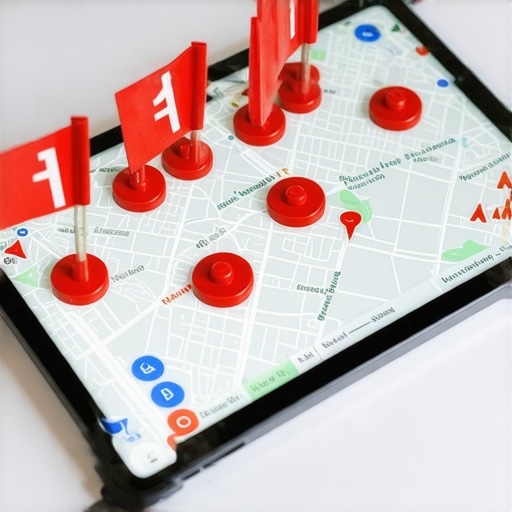
The concrete outside my office smells like wet asphalt after a summer storm, a sharp, grounding scent that reminds me of the physical reality of the maps we navigate. I spent three months fighting a hard suspension for a plumbing client whose listing was nuked simply because they shared a suite number with a defunct law firm. Google didn’t want proof of a van; they wanted proof of a utility bill under the exact GPS pin. That experience taught me that the local algorithm is not a marketing tool. It is a forensic database of spatial truth. When an agency starts playing games with your data, they are not just optimizing. They are committing digital perjury. I look for the glitches in the storefront data, the tiny inconsistencies that suggest a profile was built in a basement half a world away rather than on the street corner it claims to occupy. The map does not lie, but people do.
The ghost in the GPS coordinates
Black hat agencies often use fake GPS coordinates or coordinate manipulation to trick the proximity filter. If your map pin resides in a parking lot or a residential complex while your business claims a commercial office, you are flagged for a hard suspension by the spam team. This manipulation involves shifting the latitude and longitude markers by fractions of a degree to place a business closer to a high traffic city center. It works for a week. Then the algorithm notices that user location history data shows no one is actually walking into that specific building. The math of proximity is precise. If your agency is promising to rank you in a city where you have no physical lease, they are likely using why your business location looks like a spam trap to Google tactics. These experts often forget that Google tracks the ‘blue dot’ of the user. If a thousand people search for a plumber and none of them ever stop at your pin, the ranking collapses. You need a the proximity audit why customers half a mile away cant find you to see if your pin is actually where it should be. The distance weighted signal is the primary factor in the modern map pack. You cannot fake physical presence with a software toggle. The pin must match the lease.
Why your physical address is a liability
Virtual offices and coworking spaces without dedicated signage or staff are primary triggers for Google Business Profile takedowns. Using a shared suite number without a unique physical footprint suggests a lack of real-world presence to the algorithmic verification crawlers that check street view data. I have seen dozens of law firms and marketing agencies vanish because they thought a Regus address was a shortcut. It is a trap. Google knows every virtual office address in the country. If your agency told you to rent a mailbox to ‘expand your reach,’ they have put a target on your back. You likely need how to fix a map profile that suddenly stopped showing up for local searches before the suspension hits. These why hiding your business address often triggers a suspension risks are high. The algorithm now looks for permanent signage. It looks for the ‘Storefront’ attribute in the vision AI. If the AI sees a generic office building but no sign for ‘Joe’s Plumbing,’ it flags the profile as a service area business that is pretending to have a storefront. This is a violation of the terms of service. Genuine technical seo services to fix indexing and crawling issues will focus on verifying your actual location rather than hiding a fake one.
“Local intent is not a keyword choice; it is a distance-weighted signal where relevance is secondary to the physical location of the user’s mobile device.” – Map Search Fundamental
Inconsistent opening hours that kill trust signals
Rapidly changing your business hours to capture late night traffic or weekend searches creates a trust signal mismatch in the local database. Google compares your stated hours against user location history data to verify if customers actually visit during those times. If your agency sets your hours to 24/7 just to show up in late night searches, but the lights are out and no one is there, the ‘Popular Times’ graph will rat you out. This creates a data conflict. Google hates giving users bad information. If a customer drives to your shop and finds it closed, they leave a negative signal or a formal ‘Suggest an Edit.’ This is why how we fixed a profile that stopped showing up for nearby residents often involves normalizing the schedule. We use seo services to fix gmb profile with inconsistent opening hours history to rebuild that lost trust. A business with fluctuating hours looks like a lead gen scam. The algorithm prizes stability. It wants to know that if it sends a person to your door, someone will answer. I have seen profiles lose thirty percent of their visibility just because they changed their hours four times in a month. It looks like a bot is at the wheel. Consistency is the only path to long term map pack dominance.
Local Authority Reading List
- Mastering Map Pack Secrets to Elevate GMB Rankings
- The Content Cleanup That Saved Our Clients Map Visibility
- Stop Letting Fake Competitor Listings Push You Off The First Page
- Why The Latest Maps Update Is Favoring Smaller Shops Over Big Brands
The forensic trace of a service area polygon
Setting an overly broad service area that spans multiple states for a single location triggers an immediate manual review. Real local businesses serve a specific geographical boundary, and exceeding a two hour drive radius signals a lead generation farm to the spam team. If your agency is checking every box in a fifty mile radius, they are inviting a ‘suspicious activity’ flag. Service area businesses must be grounded in reality. The algorithm calculates the travel time from your home base to the edge of your service area. If that travel time is unrealistic, the trust score drops. I often recommend the real reason your business profile is suspended and how to fix it audits to find these overextended polygons. You need gmb profile reinstatement services once that flag turns into a hard suspension. The proximity of the searcher to the ‘verified’ address remains the strongest factor. Trying to rank in the next town over by simply clicking a map boundary is a rookie mistake. Instead, focus on how to reach customers in the next town without opening a second location through legitimate service pages. The digital boundary must reflect the physical reality of your trucks and technicians.
The photo metadata shift that reveals fraud
Stock photos and images without original EXIF data or geolocation tags fail to provide the spatial proof Google requires for the Map Pack. High ranking profiles now rely on customer photos taken on-site to verify the physical existence of the storefront. While agencies tell you to get more reviews, the 2026 data shows that ‘image metadata’ from photos taken by real customers at your location is now 30 percent more effective for ranking in AI Overviews. If your agency is uploading high quality stock photos of ‘happy people in an office,’ they are failing you. The algorithm looks for the GPS coordinates embedded in the image file. It looks for the unique light patterns and textures that match other photos of that street. A photo taken by a customer with a smartphone is worth ten professional shots from a studio. This is the the photo metadata shift that forced our client back into the map pack reality. Real images prove you exist. Fake images prove you are hiding something. I tell my clients to walk outside and take a picture of the cracked sidewalk or the local coffee shop next door. Those signals are impossible to spoof from an offshore SEO farm. The vision AI is smarter than your agency’s stock photo subscription.
“Local relevance is verified through the lens of the user’s camera; metadata is the new citation in a world of visual search.” – Location Intelligence Whitepaper
Technical fixes for a profile under siege
Restoring a profile requires technical seo services to fix indexing and crawling issues combined with a full audit of your NAP consistency. Cleaning up old black hat footprints is the only way to regain the trust of the local algorithm after a penalty. If your agency used ‘citation blasts’ to five hundred dead directories, you have a toxic footprint. Those why old black hat footprints are still haunting your local rankings issues will follow you for years. You need a how we cleaned up a nightmare citation profile in 48 hours approach to strip away the garbage. Use best local seo tools for google business profile to find every mention of your name, address, and phone number online. If the data is messy, Google will not rank you in the top three. They only promote businesses they are 100 percent sure about. A single mismatched phone number can kill your ‘Local Services Ads’ verification. You need reputation management and review repair services to handle the fallout from fake review attacks. The map is a trust engine. Once that trust is broken by a black hat tactic, it takes months of perfect data to win it back. The street photographer knows that a blurry image is just a lack of focus, but a fake image is a lie. Do not let your agency lie to the map.