
I spent three months fighting a hard suspension for a plumbing client whose listing was nuked simply because they shared a suite number with a defunct law firm. Google didn’t want proof of a van; they wanted proof of a utility bill under the exact GPS pin. This is the gritty reality of the hyper-local layer. When you live in the trenches of local search, you realize a business listing is not just a profile. It is a proximity beacon in a complex spatial database. I have seen businesses vanish because a secondary verification tier found a mismatched phone number. I have seen competitors use VPNs to drop twenty fake reviews in an hour. To survive, you need more than a basic dashboard. You need tools that understand the physics of a three mile proximity radius.
The ghost in the GPS coordinates
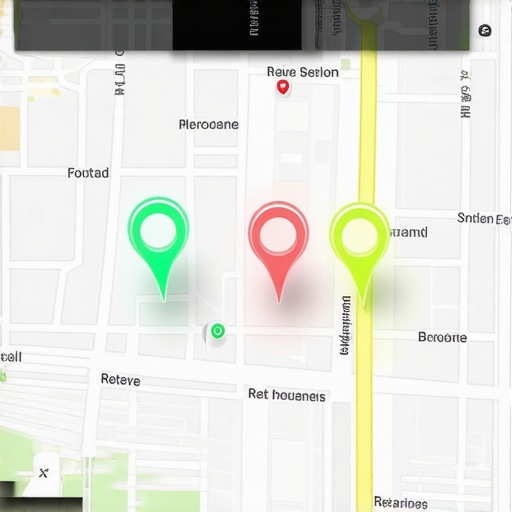
Local map movement is tracked accurately by focusing on hyper-local coordinate grids rather than broad city-level data points. Tools like BrightLocal, Whitespark, Places Scout, and Local Falcon provide the necessary granularity to see exactly where your business rank drops off at the street level. These systems use a grid overlay to simulate searches from specific latitudes and longitudes. This is the only way to see if your shop is invisible to customers only three blocks away from your front door.
“Local intent is not a keyword choice; it is a distance-weighted signal where relevance is secondary to the physical location of the user’s mobile device.” Map Search Fundamental
The algorithm does not care about your intentions. It cares about the signal strength of your data. If you are struggling with visibility, you might be suffering because your business is invisible to customers only three blocks away due to a proximity filter. The math of local search is cold. A single pixel shift in the centroid can be the difference between a ringing phone and total silence.
Why your physical address is a liability
A physical address becomes a liability when it lacks the forensic proof of real-world activity required by the latest Google verification loops. Many agencies sell the dream of ranking everywhere, but Google is tightening the noose on service area businesses that try to hide their location. If you hide your address, you might be inadvertently killing your neighborhood visibility. This often happens because the algorithm cannot verify the physical presence of your service vehicles or staff. This is why your hidden address is killing your neighborhood visibility in the current Map Pack ecosystem. We see this frequently with contractors who try to manage ten locations from a single home office. The system detects the lack of unique GPS signals and flattens the rank. You need a toolkit that can audit your local leads without using complicated software that just gives you vanity metrics.
The three mile radius that determines your revenue
The local three mile radius determines your revenue because the vicinity update shifted the algorithm to prioritize physical closeness over traditional authority signals. You can have a thousand reviews, but if a competitor is two blocks closer to the user, they might still take the top spot. This is the frustration of the modern Map Pack. We once worked with a client who had triple the reviews of their nearest rival, yet they were stuck on page two. We had to use 3 simple moves we used to beat competitors with ten times our review count to reclaim their position. It involved tightening the NAP consistency and fixing the specific schema lines that finally link your service pages to the map pack.
Local Authority Reading List
- GMB elevation techniques to dominate local search results
- The software stack that makes local map tracking painless
- The exact tools we use to verify if a gmb listing is real or fake
- How to spot competitor gmb spam before it hurts your leads
- The specific schema lines that finally link your service pages to the map pack
Tools that peel back the curtain on local search
High-performance local SEO tools peel back the curtain by exposing the exact JSON-LD LocalBusiness attributes and image metadata that trigger map pack inclusions. It is no longer about just filling out the profile. You need to look at the forensic trace of your data across the web. If you have historic citation spam from a campaign five years ago, it will act like a lead weight on your rankings. You must follow the exact steps to wipe away old spam citations from 5 years ago to clean your profile. Google is a spatial database. It cross-references your coordinates with every mention of your business online. If a directory says you are on 5th street and your profile says you are on 6th street, the trust score collapses.
“Proximity is the strongest ranking signal in the local algorithm, often overriding relevance and prominence in high-competition markets.” Vicinity Algorithm Whitepaper
Detecting the forensic trace of competitor spam
Detecting competitor spam requires auditing the user profiles of suspicious reviewers to find VPN patterns and non-local activity signatures. If you see a sudden influx of one star reviews, do not panic. Use a toolkit to verify if the accounts are real or fake. We have found that many low GMB rankings are caused by how to detect if a competitor is targeting your profile with bot traffic. Competitors will sometimes use click bots to manipulate the proximity filter. They make it look like users are searching for them from further away. This is why you need a practical kit for turning map views into real local leads. You have to fight fire with data.
The mathematical weight of local review sentiment
Review sentiment carries mathematical weight because Google’s natural language processing identifies specific service keywords that confirm your business actually performs the work it claims. It is not just about the five stars. It is about the words. If a customer mentions your specific neighborhood and the service you provided, that creates a geo-relevance signal. This is why the specific review keywords that actually move your profile up are so critical. We recommend using the exact text template that gets customers to leave 5 star reviews on the spot. This ensures the data Google wants is being fed directly into the machine.
Cleaning up the citation debris of the past
Cleaning up citation debris involves a manual audit of top-tier aggregators to resolve mismatched business names and phone numbers that create trust gaps. Old black hat footprints are still haunting your local rankings. If your business moved three years ago and you didn’t update your primary citations, Google sees a fragmented identity. This is one of the 5 hidden errors that keep your shop out of the map pack. You need a toolkit to fix low GMB rankings by aligning every data point. This is the boring, technical work that actually moves the needle. It is the logistics of search.
A toolkit for the hyper-local age
The ultimate toolkit for the hyper-local age combines real-time rank tracking with automated review monitoring and automated citation cleanup protocols. You cannot do this manually anymore. The scale of the map spam and the complexity of the proximity filters are too high. You need to know how to audit your GMB profile with a toolkit that looks at more than just where you rank. It needs to look at your service area settings. If your service area is too large, it might be triggering a proximity penalty. This is why your service area settings might be triggering a proximity penalty and keeping you out of the 3 pack. Use tools that give you the forensic evidence needed to dominate your local market.