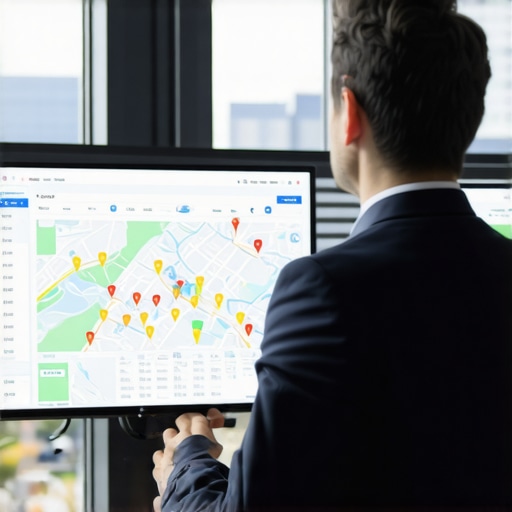
Just yesterday, I watched a potential client scroll past my business on Google Maps—again—without even noticing I was there. It’s a familiar, frustrating scene. No matter how much effort I poured into optimizing my profile, those elusive local leads kept slipping through the cracks. It suddenly hit me: if I didn’t crack the code on local rankings, I might be risking more than just lost opportunities—I could be losing my business entirely. Does this sound all too familiar?
Why Local Rankings Matter More Than Ever for Small Businesses
These days, customers are searching on Google and Maps with a sense of urgency, expecting to find what they need immediately. According to a recent study, over 78% of local mobile searches result in a purchase within 24 hours (Think with Google). That means your business’s visibility in those local map packs isn’t just a digital badge of honor—it’s the lifeblood of your leads and growth. If your rankings are slipping, so are your chances of capturing those nearby customers who are ready to buy.
Is Local SEO Still Worth the Effort in 2026?
Early on, I made a rookie mistake—neglecting to update my Google My Business (GMB) profile after changing my business hours. That oversight damaged my rankings and, ultimately, my visibility. I learned the hard way that ignoring the nuances of local SEO can cost you leads. Today, I want to share proven strategies that helped me turn things around—methods you can implement now to prevent the same mistakes and ensure your business gets seen when it counts. Ready to discover the tactics that will elevate your local presence and bring in more leads? Let’s get started.
Optimize Your Google My Business Profile Step-by-Step
Start by claiming your GMB listing if you haven’t already; this is your foundation. Ensure all business information is accurate, including name, address, phone number (NAP), and operating hours. Update these details regularly to reflect any changes, as inconsistency signals lower rankings. Next, upload high-quality, keyword-rich photos that showcase your services or products. These visuals not only attract visitors but also positively impact your local visibility. An example: I once uploaded a series of professional photos of my storefront and services, which helped increase engagement and inquiries within weeks.

Implement Local SEO Tactics That Drive Results
Leverage Local Keywords in Your Content
Integrate city and neighborhood names naturally into your website content, service pages, and blog posts. This signals to Google your relevance for local searches. For example, instead of generic wording, specify “best coffee in Downtown Springfield” to target precise queries. I applied this by optimizing my homepage and service descriptions with targeted local keywords, which resulted in higher map pack visibility within days.
Build Consistent NAP Citations Across Platforms
Ensure your business’s Name, Address, and Phone number are consistent everywhere—industry directories, social media, and local listings. Use tools like Moz Local or BrightLocal for auditing and correcting discrepancies. In my experience, correcting citation inconsistencies led to a tangible boost in rankings and increased local calls within two weeks.
Gather Reviews that Enhance Credibility
Actively solicit reviews from satisfied customers. Make it easy by sending direct links or QR codes. Respond to each review professionally, thanking customers and addressing concerns. For instance, after prompting a few clients for feedback, I saw my average rating improve from 3.8 to 4.7 stars, which directly influenced my placement in the map pack.
Increase Engagement With Local Content
Create blog posts or social media updates highlighting local events, collaborations, or customer stories. Google favors active profiles that demonstrate community engagement. I once sponsored a local charity event, sharing the story online, which not only boosted my local relevance but also earned backlinks, further elevating my rankings. To learn more about advanced tactics, check out this comprehensive guide.
Monitor Performance and Adapt Quickly
Use Google My Business Insights and third-party tools to track your rankings, reviews, and engagement metrics weekly. Identify patterns—like which posts generate the most clicks—and adjust your strategy accordingly. I once noticed that posting special weekly offers increased calls by 15%, so I integrated that into my routine continuously. Staying flexible ensures sustained growth in competitive local markets.Many business owners believe that simply optimizing their Google My Business (GMB) profile and launching local SEO tactics will guarantee top rankings. However, there are subtle, often overlooked factors that can significantly hinder your progress. For instance, a common myth is that consistency alone is enough for citations; in reality, Google values citation accuracy, context, and recency more than just uniform NAP details. Relying solely on automated citation management can lead to outdated or misformatted listings, which may actually lower your rankings rather than improve them. To truly advance, you must understand these nuances and adapt accordingly.
One advanced mistake I see frequently involves neglecting the impact of local backlinks and community signals. While many focus on on-page SEO and reviews, they underestimate how local backlinks—such as collaborations with nearby businesses or sponsorships—boost your local relevance in Google’s eyes. According to a 2024 Moz study, backlinks from authoritative local sites can increase your rankings more effectively than generic backlinks from national directories. Additionally, engaging with community events and sharing that content on your GMB posts can serve as powerful signals of local authority.
Have you ever fallen into the trap of over-optimizing for keywords without considering user intent or local relevance? This misstep can lead to ranking fluctuations and even penalties if Google perceives your content as spammy or manipulative. To avoid this, focus on providing genuine value through your local content and community engagement, rather than just keyword stuffing. For advanced tactics, explore this detailed guide on refining your local SEO strategy and identifying hidden pitfalls.
Lastly, be cautious of the trap of choosing shortcuts over sustainable, well-rounded SEO efforts. Quick link-building schemes or fake reviews might seem tempting, but these can backfire by damaging your reputation and trustworthiness in Google’s algorithms. Instead, build quality signals through authentic customer interactions, local partnerships, and continuous profile optimization. This long-term approach ensures consistent growth in your local rankings and maps lead generation. Interested in mastering this game? Check out this resource for deeper insights into sustainable GMB elevation techniques.
Remember, the key to success isn’t just about surface-level tactics but understanding and leveraging these subtle, powerful nuances. Have you ever fallen into this trap? Let me know in the comments.
Maintaining your local SEO success requires the right set of tools and a disciplined approach. Over time, algorithms evolve, competition intensifies, and staying ahead means leveraging technology that streamlines your efforts and provides actionable insights. Personally, I rely on a combination of software solutions that I’ve tested and refined to ensure consistent results — tools that help me monitor rankings, manage citations, gather reviews, and analyze competitor strategies.
Prioritize Reliable Citation Management
Citations are foundational for local rankings, but manual updates can be tedious and error-prone. That’s why I recommend using BrightLocal for citation audits and cleanups. It automatically scans multiple directories, highlights inconsistencies, and helps you correct NAP discrepancies. This process ensures your citations enhance your local signals rather than dilute them, which Google values greatly. Regular citation health checks using such tools can prevent ranking drops triggered by outdated or inconsistent listings.

Track and Analyze Local Rankings with Precision
Staying on top of your map pack positions demands consistent tracking. I personally use Whitespark’s Local Rank Tracker because it provides accurate, location-specific data and competitive analysis. Unlike generic rank checkers, it offers insights into how your rankings fluctuate across different areas, enabling tailored strategies. This way, I can identify which tactics are working and pivot quickly—crucial in a dynamic local search environment.
Automate Review Generation and Management
Reviews profoundly influence local rankings and consumer perception. I’ve seen firsthand how automating review requests with Birdeye or Podium accelerates the acquisition of fresh feedback. These platforms integrate seamlessly with your customer workflow, prompting satisfied clients to leave reviews while ensuring responses are timely. Regular review management nurtures your reputation and signals to Google that your business is active and trusted.
Leverage Competitor Insights to Outperform
Understanding where your competitors are excelling can unlock new opportunities. SEMrush or SpyFu help me analyze their local keywords, backlinks, and review profiles. Armed with this intelligence, I adjust my content, build strategic backlinks, and foster local collaborations that improve rankings more rapidly. Remember, being aware of competitive tactics is key to maintaining your edge in the map pack.
Looking ahead, I believe the trend will increasingly favor automation and real-time data analysis, making it easier than ever to keep your local SEO efforts scaled and effective. To further enhance your strategies, I recommend exploring advanced techniques outlined in this guide, which covers refining your GMB elevation tactics comprehensively.
If you haven’t already, try implementing a ranking tracker combined with citation health monitoring today. The investment in these tools will pay off as they keep your profile primed for continuous visibility and growth.
Over the years, I’ve realized that mastering local SEO isn’t just about ticking boxes—it’s an art of subtle strategies and unseen signals that can make or break your visibility. One of my most eye-opening lessons was discovering how overlooked aspects like local backlinks from community partners can dramatically influence your rankings—costing other businesses their shot at local dominance. The real game-changer was understanding that Google is constantly evolving, favoring authentic, community-driven signals over superficial optimizations. If I could give one advice, it would be to focus not just on immediate tactics but on fostering genuine local relevance. Have you considered how collaborations or sponsorships could boost your GMB authority? The secret lies in building trustworthy local bridges that Google’s algorithms value highly.
Reading this post really hits close to home. I’ve noticed how competitive local searches have become, and despite optimizing my GMB profile meticulously, I still see traffic slipping away. It’s clear now that combining these tactics with a focus on community engagement, like sponsoring local events or collaborating with nearby businesses, can significantly boost relevance in Google’s eyes. I’ve also started using citation management tools like BrightLocal to clean up discrepancies, and the difference in rankings has been noticeable within a few weeks. Do others find that local backlinks from relationships within your community actually move the needle? I’d love to hear how you’ve managed to turn around stagnating local rankings, especially in crowded markets.