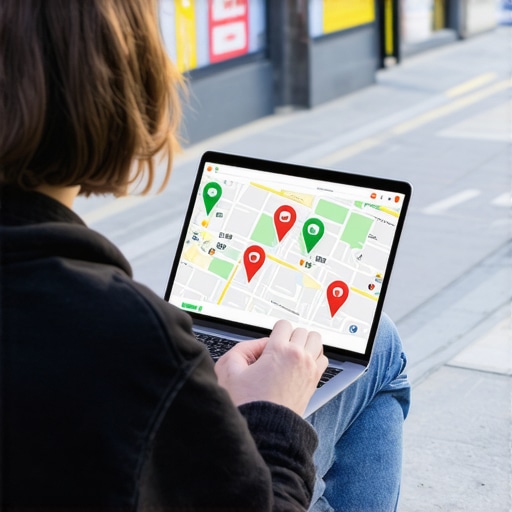
It was a frustrating Tuesday afternoon when I realized, despite having a great service, my business barely showed up in local searches. I had been chasing the Google Map Pack rankings for months, tweaking profiles, and pouring money into local ads—yet I was still invisible to potential customers just a few blocks away. The lightbulb moment hit me hard: I wasn’t leveraging the true power of the top Map Pack visibility strategies.
The Game-Changer I Needed to Stand Out in Local Searches
From that point on, I dedicated myself to understanding the intricacies of boosting my local SEO, focusing specifically on mastering the Map Pack. I discovered that with targeted GMB (Google My Business) elevation techniques, I could dramatically improve my rankings and attract more local leads. The best part? It didn’t require a massive budget, just strategic implementation of proven practices. I want to share my experience because I believe your business shouldn’t be left behind simply due to overlooked tactics or misconceptions.
Does Your Business Feel Invisible to Local Customers?
If you’ve ever wondered why competitors seem to dominate the local search results while you remain hidden, you’re not alone. I’ve been there. But here’s the thing—what worked for me can work for you too, if you understand the right strategies. For example, early on, I ignored the importance of consistent NAP (Name, Address, Phone Number) data—an expensive mistake that cost me valuable visibility. Now, I recommend going beyond basic optimization and exploring GMB elevation strategies to boost your rankings effectively.
According to a recent study, 78% of local mobile searches result in an offline purchase, making it clear that visibility in the Map Pack can directly influence your bottom line. That’s why I’m committed to helping others navigate these strategies and maximize their local presence.
In the upcoming sections, I’ll guide you through actionable steps to elevate your GMB profile, optimize your local SEO, and generate more leads right from the map. Ready to turn your local search game around?
Optimize Your Google My Business Profile for Maximum Impact
Start with a complete, accurate GMB profile. Ensure your business name, address, and phone number (NAP) are consistent across all online platforms—much like syncing the gears of a well-oiled machine. In 2024, Google favors listings that show consistency and professionalism. I once had a misaligned address in my profile, causing a significant drop in local visibility. Correcting that boosted my rankings within weeks. Use GMB elevation techniques to stand out from competitors.
Key steps:
- Fill out all required fields: categories, hours, and services.
- Add high-quality photos that reflect your business authentic style. Visuals act like a storefront window—enticing passersby. Insert images that showcase your work or storefront.
- Regularly update posts and special offers to signal activity and relevance.
Build Local Citations and Consistent NAP Data
Think of citations as digital word-of-mouth endorsements. Each mention of your NAP on trusted directories amplifies your authority in local searches. I implemented a unified NAP across multiple citations—Yelp, Bing Places, and industry-specific directories—and saw my rankings leap. Discrepancies create confusion for Google, resembling a misaligned compass. Use tools from local SEO optimization guides to streamline this process.
Practical tips:
- Verify and claim your listings on all relevant platforms.
- Ensure NAP details match exactly—no abbreviations or misspellings.
- Prioritize citations on authoritative sites for improved rankings.
Gather and Manage Customer Reviews Effectively
Customer reviews are your social proof, like digital testimonials that influence both Google and potential clients. I encouraged reviews by sending follow-up emails post-service, making it easy through direct links. Positive reviews and high star ratings boost your credibility and rank. Remember, respond promptly and professionally to all feedback—this engagement signals activity and trustworthiness. For detailed strategies, review map pack secrets.
Best practices:
- Request reviews subtly after providing excellent service.
- Respond to reviews to show active engagement and appreciation.
- Avoid fake reviews; focus on genuine client feedback.
Leverage Local Content and Engagement
Creating localized content acts as a magnet for your community and enhances relevance. I blogged about local events and collaborated with nearby businesses, which earned backlinks and increased visibility. Engaging with local prospects via social media, events, and partnerships reinforces your presence. Think of it as planting seeds in fertile ground—your efforts organically boost your Map Pack visibility over time. Explore insights at lead generation strategies to contextualize these efforts.
Action steps:
- Publish blog posts or videos centered on local topics.
- Participate in community events and promote on your channels.
- Engage with local reviews, questions, and social media mentions actively.
Many business owners believe that simply claiming and optimizing their Google My Business profile guarantees top rankings in the Map Pack. However, this is a misconception that can lead your efforts astray. The truth is, local rankings are influenced by a nuanced combination of factors, including citation consistency, review management, and local content engagement. Relying solely on Google My Business optimization without addressing these other elements often results in subpar visibility. For example, some assume that acquiring reviews automatically boosts rankings, but without strategic review solicitation and reputation management, those reviews might not translate into higher positions. In my experience, a common mistake is neglecting the importance of deep local engagement—like collaborating with nearby businesses or creating localized content—which actually signals relevance to Google’s algorithms.
One hidden nuance many overlook is the significance of Google’s recent focus on user experience signals, such as click-through rates and proximity-based preferences. According to Moz’s local search ranking factors study, these user-centric metrics have grown in influence, making it essential to craft compelling snippets and ensure fast, mobile-friendly website experiences.
Avoid the trap of overemphasizing link building or NAP consistency without also managing user engagement factors; doing so can lead to wasted effort. Instead, integrate proven strategies like local content creation, review enhancement, and optimizing for user actions, which collectively influence your Map Pack positioning.
How Can Advanced Local SEO Tactics Impact Your Map Pack Rankings?
Implementing layered strategies that adapt to evolving Google algorithms can dramatically improve your visibility. Tactics such as leveraging micro-moments, utilizing local schema markup, and continuously analyzing user interaction data help fine-tune your approach. For deeper insights, explore how GMB elevation techniques can be applied to outperform competitors and sustain rankings over time. Remember, local SEO isn’t static—staying ahead requires understanding these subtle, yet powerful, nuances.
In the end, do you risk falling into the trap of focusing only on surface-level fixes? I recommend reviewing your entire local SEO ecosystem regularly and adapting your tactics accordingly. Want to unlock more advanced strategies? Check out comprehensive resources on [GMB elevation techniques](https://businessmappackboosters.com/gmb-elevation-technniques-to-dominate-local-search-results) and stay ahead of the curve. Have you ever fallen into this trap? Let me know in the comments.
Maintaining Your Local SEO Momentum with the Right Tools
Achieving top rankings in the Map Pack is only half the battle; keeping those positions requires consistent effort and the right technological allies. I swear by tools like BrightLocal for reputation management, as it allows me to monitor reviews and citation consistency effortlessly. Not only does it help identify review gaps, but it also automates review requests, saving valuable time. Additionally, Whitespark’s Local Citation Finder has been instrumental in keeping my NAP data accurate across multiple directories, preventing rank drops caused by conflicting information.
For tracking rankings and local search visibility over time, I rely on SEMrush’s Local SEO Toolkit. Its detailed reports and competitor analysis features enable me to stay ahead and adapt swiftly to algorithm shifts. As local SEO evolves, leveraging such tools is essential for proactive maintenance rather than reactive fixes. Looking forward, I predict that automation and AI-driven insights will become standard, making real-time monitoring more accessible and precise.
How do I keep my local rankings steady over the long haul?
The key lies in integrating these tools into a systematic approach. Regularly scheduled audits—using BrightLocal to verify citation accuracy, Whitespark for citation opportunities, and SEMrush for ranking trends—are non-negotiable. Setting automated alerts for review activity and ranking fluctuations ensures you can respond promptly, maintaining your presence and reputation. Remember, consistency is your best friend in local SEO. To deepen your approach, explore how GMB elevation techniques can serve as a robust foundation for sustained visibility and lead generation.
If you haven’t already, incorporate these tools into your routine and observe how your local rankings become more resilient against competitors and algorithm shifts. Let me know which tool transforms your maintenance game the most! Ready to go pro? Try setting up automated review requests through BrightLocal today and watch your reputation organically grow.
< >
>
Lessons That Challenged My Approach to Local Rankings
One of the toughest realizations was that relying solely on Google My Business optimization is like building a house on a shaky foundation. Incorporating local citations and consistent NAP details transformed my visibility, proving that a holistic strategy works better than isolated tactics.
Another lightbulb moment came when I discovered the subtle impact of local content and community engagement. It surprised me how creating genuine local connections and localized content could powerfully influence rankings, reminding me that authenticity outweighs shortcuts.
Finally, understanding that user signals, such as click-through rates and mobile experience, are now central to rankings changed my entire approach—making me prioritize website speed, compelling snippets, and mobile-friendly design, which paid off in higher rankings and increased leads.
Tools That Became My Secret Arsenal
- BrightLocal: I trust this for reputation management, review monitoring, and automating review requests, saving time and amplifying my credibility.
- Whitespark’s Local Citation Finder: It’s invaluable for detecting citation gaps and ensuring NAP consistency across authoritative directories.
- SEMrush Local SEO Toolkit: This helps me track local rankings, analyze competitors, and adapt my strategies proactively—key for staying ahead in a competitive landscape.
Your Next Step on Local SEO Paths
Remember, mastering local rankings isn’t about quick fixes—it’s a continuous journey of learning, adapting, and engaging. Dive deep into proven strategies like GMB elevation techniques and integrate intelligent tools to keep your momentum steady. The future belongs to those who embrace these nuanced and personalized approaches—are you ready to elevate your local presence and turn your Map Pack into a lead-generating powerhouse?
What’s been your biggest breakthrough or challenge when boosting your local rankings? Share your insights in the comments below!