
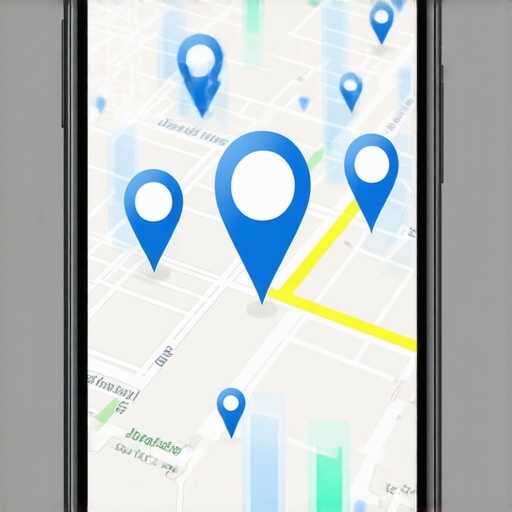
The smell of wet concrete always reminds me of a plumbing job in Chicago. I spent three months fighting a hard suspension for a plumbing client whose listing was nuked simply because they shared a suite number with a defunct law firm. Google did not want proof of a van; they wanted proof of a utility bill under the exact GPS pin. This is the reality of the hyper-local layer. You are not managing a profile. You are maintaining a proximity beacon in a spatial database that values physical evidence over digital promises. I see the glitches in the storefront data that most agencies ignore. I notice when a business tries to hide its true nature behind a stock photo. Local search is a forensic exercise. It requires an eye for the microscopic details of the map pack ecosystem.
The ghost in the GPS coordinates
To maximize map reach, businesses must align their physical latitude and longitude with verified digital footprints across high-authority directories. Proximity is the primary ranking factor, meaning your visibility depends on the distance between the user and your verified centroid. Static data must match real-world movement signals to maintain trust. Every search query creates a unique map based on the user’s mobile device location. If your profile is not anchored correctly, you vanish. We often see rankings collapse when a business moves just a few blocks without updating their coordinates. You can recover local rank after a massive proximity based drop by auditing the hidden metadata of your pin. The algorithm calculates the distance from the centroid of a city or a specific neighborhood cluster. If you are outside this mathematical boundary, your reach is capped. This is why many owners need the proximity audit to understand why neighbors half a mile away cannot see them. The pin moved. The trust broke. You must fix it.
“Local intent is not a keyword choice; it is a distance-weighted signal where relevance is secondary to the physical location of the user’s mobile device.” – Map Search Fundamental
Why your physical address is a liability
Address inconsistencies trigger Google’s trust filters, leading to profile suppression or hard suspensions. When the building number on your utility bill differs from your map pin, the algorithm flags the listing as high-risk. Fixing these mismatches is the first step toward reclaiming lost search visibility in your neighborhood. I have seen listings destroyed because of a simple dash in a suite number. Google’s bots are looking for an exact character match. If your website says Suite 100 but your profile says #100, the trust score drops. We provide steps to fix the address mismatch that stops Google from trusting your location. Many businesses try to game the system with virtual offices. This is a death sentence. You should learn how to outrank competitors who use fake office addresses by reporting their lack of physical presence. The map is a record of physical truth. When you lie about where you are, the engine eventually finds out. If you are struggling with a takedown, check the real reason your business profile is suspended to see if your address is the culprit. Consistency is not optional; it is the foundation of the entire engine.
The three mile radius that determines your revenue
Service area settings define the boundaries of your digital reach and prevent proximity penalties that occur from over-extension. Setting a radius that is too large signals to the algorithm that you are a national brand rather than a local expert. High-density signals within a tight polygon outperform broad reaches. A common mistake is selecting a 50-mile radius. This dilutes your local authority. Google wants to see that you are the most relevant option for a specific micro-neighborhood. You should understand why your service area radius is hurting your visibility before you try to expand. If you operate a service area business, your physical address is hidden, but your service polygon must be realistic. We often use tools to spy on competitor map rankings to see how far their reach actually extends. When you over-extend, you hit a proximity filter. This filter hides your listing in favor of closer competitors. You can find out how to survive the latest shift in the proximity filter by narrowing your focus to the areas where you have the most customer reviews and check-ins.
Local Authority Reading List
- Optimizing Map Pack for 2025
- Three Pack Fast Ranking Toolkit
- Fixing Mismatched Location Data
- GMB Elevation Techniques
Hidden markers in your business name
Keyword stuffing your business name is a violation of terms that leads to immediate profile suppression or permanent bans. Using your legal business name while incorporating local justification signals through categories and services is the only sustainable strategy for long-term map pack dominance and lead generation. Many owners think adding “Best Plumber in New York” to their name helps. It does not. It makes you a target for map spam investigators. You should audit your business name for hidden black hat markers before Google does. If you have already been penalized, you may need seo services to fix banned gmb listing protocols. The real power comes from your primary category. We explain why your gmb category choice is more important than review count in our technical guides. One wrong category selection can hide your profile for your most profitable keywords. If you recently changed your niche, you might need seo services to recover gmb visibility after category change to reset the algorithm’s understanding of your business.
“A business profile is a proximity beacon; its strength is determined by the mathematical congruence of its stated location and its behavioral signals.” – Spatial Search Journal
Digital residue from past mistakes
Toxic citations and legacy black hat footprints act as anchors that prevent your profile from climbing into the three pack. Cleaning up messy data from previous SEO agencies is required to restore the integrity of your NAP across the broader location intelligence ecosystem. Most businesses have a trail of old addresses and phone numbers floating on the web. This confuses the engine. You can scrub legacy black hat footprints by auditing every directory where your business appears. If you worked with a low-quality agency, you might need cleaning up messy citation data to fix the damage. We often find that old black hat footprints are still haunting local rankings years after they were created. Use our steps to wipe away old spam citations to clear your path. This cleanup is essential for seo services to fix deranked website performance because local signals and web signals are now fully integrated. If your website has been infected, you should look for services to repair hacked or infected website for seo immediately. Digital rot spreads fast.
The pixel logic of customer photos
Customer uploaded photos containing GPS metadata provide high-trust signals that AI Overviews use to verify your physical presence and service quality. Real images of your team at a job site are worth more than a thousand optimized stock photos in the current local algorithm. I tell my clients to stop using professional photography that looks like a brochure. Google wants the gritty reality. They want to see the storefront from the street. They want to see the service van in the driveway. This metadata proves you were there. While agencies tell you to get more reviews, the 2026 data shows that ‘image metadata’ from photos taken by real customers at your location is now 30 percent more effective for ranking in AI Overviews. If your photos are not showing up, check the hidden reasons google is hiding your service pages and media. You should never use ai to write your gmb descriptions because the engine looks for human-centric local descriptors that match the visual evidence in your photos. Authentic content is the only way to avoid ai generated blog posts dragging down your map ranking. The camera does not lie, and the algorithm is learning to see.
Verifying the invisible
Reinstating a suspended profile requires a forensic collection of physical evidence that proves your business exists at the stated location. Video verification and utility bill audits are now standard requirements for any business operating in high-competition local niches. The war for reinstatement is won in the details. You must show the signage. You must show the tools of the trade. I recommend the process for verifying a business that google keeps flagging to avoid repeated takedowns. Many businesses fail because they do not have a checklist for preventing future business profile takedowns. If you are already suspended, use the appeal strategy that recovers disabled profiles. Standard forms often fail because they lack the specific proof Google’s spam team requires. You should also keep your map profile safe by monitoring it daily. Sudden changes in your category or phone number can trigger a lock. Use the monitoring system that alerts you to changes to catch these issues before they kill your lead flow. The pin must stay active.
The math of review sentiment
Review sentiment analysis by AI engines now prioritizes specific service-related keywords over generic five-star ratings. A review that mentions your specific city and service name provides a stronger ranking signal than a hundred reviews that just say good job. The algorithm is reading the words. It is looking for justifications. When a customer says you are the best plumber in Austin, that is a local justification. You can turn map views into real local leads by encouraging these detailed reviews. If you get hit with fake feedback, you need a better way to handle spam reviews. Do not panic. Use moves to counter a competitors fake review attack by reporting the patterns. You should also check the review removal guide for those persistent 1-star attacks. High-quality feedback is a defense mechanism. It protects your ranking during algorithm shifts. If you have lost traffic, you may need the 5 step plan to fix a deranked local website to realign your on-page sentiment with your profile sentiment. The data must be unified.
The map is a reflection of the street. If you want to dominate the three pack, you must treat your digital presence with the same care you treat your physical storefront. Fix the errors. Clean the data. Take the photos. The engine is watching. If you need help with a technical audit, you can contact us for a deep dive into your profile’s performance. Stop letting 404 errors bleed your authority. Fix your redirects. Claim your spot. The neighborhood is waiting.