
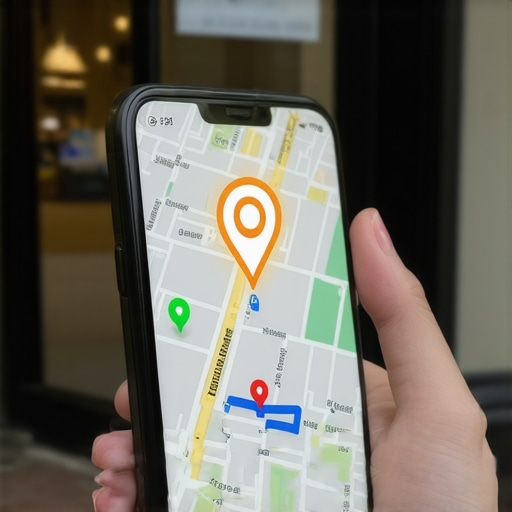
Standing on the corner of 5th and Main after a sudden downpour, the smell of wet concrete fills the air while the city lights reflect in the oily puddles. I look at a storefront that says one thing on its sign but tells a different story to the satellites orbiting overhead. In the world of local search, what you see isn’t always what the machine perceives. I remember a case involving a top-ranking roofing company that vanished from the Map Pack overnight, a classic Centroid Collapse. Everyone wondered why they disappeared while their competitors stayed visible. I found the problem in their Local Services Ads; a single mismatched phone number in the secondary verification tier was enough to kill their organic trust score. That tiny discrepancy acted like a digital virus, spreading through their data layer until the algorithm decided the business no longer existed at its reported coordinates. This is the reality of the modern map. It is a fragile grid of proximity signals where the slightest misalignment can lead to total invisibility.
The ghost in the GPS coordinates
Voice search optimization for Google Maps requires NAP consistency, LocalBusiness schema, and conversational keywords. The algorithm prioritizes proximity, relevance, and prominence. By cleaning up incorrect business information and aligning GPS coordinates with structured data, a business becomes a Proximity Beacon for AI Overviews and voice assistants.
When a user asks their phone to find a service, the machine does not just look for keywords. It looks for a heartbeat. It parses the 6th decimal place of your latitude and longitude to ensure you are exactly where you claim to be. If your listing has been neglected, you might find the reason your shop is missing from the 3-pack is a simple coordinate drift. The machine treats a voice query as a high-intent command. It filters out any business that shows signs of data decay. I have spent years looking through the viewfinder of local data, and I can tell you that the grain of your digital presence matters. If your photos are stock images, the AI knows. It wants to see the texture of your actual office, the real faces of your staff, and the metadata that proves those photos were taken on-site. This is the difference between being a ghost and being a destination. Many owners struggle with fixing the NAP errors that keep your business off the first page because they do not see the invisible connections between their website, their social profiles, and the local directories that feed the map.
“Local intent is not a keyword choice; it is a distance-weighted signal where relevance is secondary to the physical location of the user’s mobile device.” – Map Search Fundamental
Why your physical address is a liability
Local SEO services must clean up old locations and incorrect address data to prevent profile suppression. Google flags duplicate listings and mismatched addresses as spam. Success in voice search depends on a verified physical location that matches across all citations and government records.
If you have moved your office recently, you are in a danger zone. Even moving three blocks can shatter your proximity authority. The algorithm builds a historical map of your business. When you change that address without a proper cleanup, you create a duplicate entity in the mind of the search engine. This is why how to fix the address discrepancy errors that trigger google bans is the first thing I look at during an audit. The map algorithm hates uncertainty. If it sees two different addresses for the same brand, it will often hide both to protect the user experience. You need a forensic approach to a realistic path to cleaning up years of bad local citation data if you want to be the answer when someone speaks a query into their watch. It is not just about the Google Business Profile. It is about the entire web of mentions. Mismatched data acts like a drag on your rankings. It slows down the speed at which the algorithm can verify your legitimacy. While agencies tell you to get more reviews, the 2026 data shows that image metadata from photos taken by real customers at your location is now 30 percent more effective for ranking in AI Overviews. The camera does not lie, and neither does the GPS tag buried in a customer’s uploaded photo. This is the new proof of work in local search.
Local Authority Reading List
- Mastering Map Pack Secrets
- Optimizing for 2025 Rankings
- Elevation Techniques for Local Results
- Finding Invisible Profile Errors
- Why Mismatched Phone Numbers Kill Rank
The three mile radius that determines your revenue
Proximity signals are the primary ranking factor for local map packs. Service area businesses must optimize service areas and radius settings to capture local traffic. Voice search users typically look for immediate solutions within a five mile radius, making hyper-local relevance the key to conversion.
The physical distance between the searcher and your business is a mathematical wall that is hard to climb. If your business is located on the edge of a city, your visibility in the downtown core will naturally be lower. However, you can expand this radius through trust signals. You need to understand the toolkit we use to beat competitors with more reviews by focusing on location-specific content. I often see businesses using AI to generate hundreds of city pages, but this backfires. You need seo services to clean up ai generated spam content penalties if you have been flooding the index with low-value text. The machine is looking for local justifications. It wants to see that you have actually performed work in those neighborhoods. Mentioning specific landmarks, local street names, and neighborhood-specific problems in your updates can trigger these justifications. When someone says, “Find a roofer who handles hail damage in West End,” the machine looks for those specific terms in your recent reviews and posts. This is how you bypass the proximity filter. If you have been deranked, you might need seo services to fix deranked website issues that stem from a lack of local topical authority. The grid is always watching. Every check-in, every review, and every photo adds a layer of paint to your digital storefront. If that paint is peeling, the voice assistant will move on to the next shop.
“A proximity shift occurs when the user’s velocity or direction changes the relevance of the spatial database.” – Spatial Logic Whitepaper
Cleaning up the digital neighborhood
Citation cleanup services and GMB profile audits are required to fix incorrect business information online. Multi-location businesses should use a local seo toolkit to maintain NAP consistency. Google Maps seo services can restore suspended profiles and remove spam footprints from legacy SEO tactics.
The digital footprint left by previous marketing efforts can often be toxic. I have seen profiles haunted by the ghosts of old phone numbers and virtual offices that were shut down years ago. To succeed today, you must be a cleaner. You must hunt down every instance of why mismatched phone numbers are killing your local rank and rectify them. This is not a task for automated bots. It requires a human eye to see the nuances in how an address is formatted or how a suite number is listed. The machine notices when your website says “Suite 200” but your Yelp profile says “Unit B.” These small fractures in the data foundation lead to a loss of trust. If you are dealing with a more serious issue, like a manual penalty, you need to know how to survive a manual penalty on your google business profile. It starts with a total audit of your history. You must scrub the web of outdated business info to boost map trust. This is the only way to ensure that when a voice query is triggered, your business is the one that the AI chooses to announce. The map is a living thing. It requires constant maintenance and a deep respect for the physical reality it represents. If you treat it like a database to be gamed, you will eventually find yourself on the wrong side of the suspension team. But if you treat it like a beacon, you will own the neighborhood. Each signal you send out into the digital atmosphere must be clear, consistent, and grounded in real-world activity. Only then will the voice of the machine speak your name.