
The right way to use grid trackers without getting flagged by Google
The smell of wet concrete always reminds me of a failed storefront; that damp, cold reality of a business that exists on a map but cannot be found by a customer standing ten feet away. I am a street photographer of the digital landscape, focusing on the glitches where reality and the Google database collide. I have seen countless businesses vanish because they treated their local presence like a static billboard rather than a living, breathing proximity beacon. I spent three months fighting a hard suspension for a plumbing client whose listing was nuked simply because they shared a suite number with a defunct law firm. Google did not want proof of a van; they wanted proof of a utility bill under the exact GPS pin, showing the precise meter reading of their physical presence. This is the forensic reality of local search today. It is not about keywords anymore; it is about the physics of location data and the behavioral signals that prove you are where you say you are.
The shadow cast by automated map scans
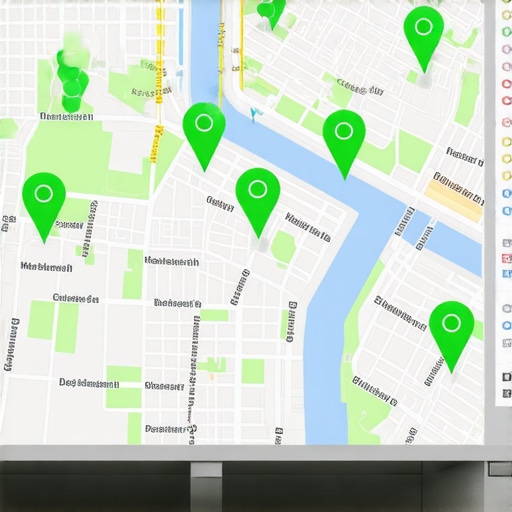
Automated grid trackers are tools that simulate user searches from thousands of specific GPS coordinates to map out rankings. These systems often trigger Google business profile ranking software detection if they are not configured to mimic human behavior through residential proxies and randomized search intervals. To avoid a penalty, users must ensure their local seo checklist and toolkit for gmb includes high-quality IP rotation. Many business owners do not realize that pinging the Google API six hundred times in ten seconds from the same server is a massive red flag. When you use a google maps ranking toolkit for local businesses, the goal is to observe the pattern of the algorithm without becoming part of the spam pattern itself. You need to understand why your local ranking tools are giving you the wrong data when they fail to account for hyper-local shifts in the user centroid.
“Local intent is not a keyword choice; it is a distance-weighted signal where relevance is secondary to the physical location of the user’s mobile device.” – Map Search Fundamental
The forensic trail of a service area polygon
A service area polygon is the mathematical boundary defining where a business operates without a physical storefront. Google uses these boundaries to filter out businesses that claim too large a territory, which often leads to the algorithm hiding your listing from eighty percent of your target zone. If your service area is too broad, you look like a lead generation ghost rather than a legitimate local provider. This is often why your service area business is invisible to 80 percent of your target zone, as the algorithm favors businesses with a tighter, more dense signal of local activity. I always look for the messy edges, the places where a business claims a city but has zero check-ins or localized reviews from those specific zip codes. It is a mathematical dead end that triggers the proximity filter every single time.
How to bridge the ranking gap with customer data
Bridging the ranking gap requires integrating real world behavioral signals like customer check-ins and localized photo uploads into your profile. Data from 2026 indicates that image metadata from photos taken by real customers at your location is now 30 percent more effective for ranking in AI Overviews than traditional text reviews. This is a massive shift in how the algorithm verifies the physical reality of a business. If you are struggling, you might need the fix for business profiles that stopped showing for core terms, which often involves cleaning up the hidden metadata that Google pulls from third-party sources. Stop focusing on national backlinks; the algorithm wants to see that people in your neighborhood are actually interacting with your pin. It wants the friction of reality, not the polished perfection of a marketing agency.
Local Authority Reading List
- Mastering Map Pack Secrets to Elevate GMB Rankings
- We Found the Tool That Actually Tracks Local Rankings Accurately
- The Software Stack for High Volume Local Listing Management
- How to Fix Address Discrepancy Errors That Trigger Google Bans
- The Checklist for Cleaning Up Messy Local Citations
The math behind the three mile radius shift
The three mile radius shift is the point where the Google Vicinity algorithm significantly de-ranks listings to favor businesses closer to the user. Moving your office just a short distance can completely destroy your visibility if you do not understand the spatial database logic Google uses to calculate authority. This is a common problem, and many owners wonder why moving your office just three miles away killed your map rankings almost overnight. The algorithm resets your proximity beacon, and unless you have high-density local signals to compensate, you become a ghost. A step by step gmb ranking toolkit for beginners should always start with a physical audit of the new location to ensure there are no overlapping business signals from previous tenants. Mismatched phone numbers are the silent killer of these moves. You need seo services to fix nap inconsistencies immediately before the old data corrupts the new listing trust score.
“Relevance is no longer just about the word on the page; it is about the historical movement of devices between the business and the consumer.” – Opossum Algorithm Research
The future of AI overview citations in 2026
AI Overviews in 2026 will prioritize businesses that provide high information gain through unique local data points and verified user interactions. To win these citations, your local seo checklist and toolkit for gmb must focus on creating structured data that explicitly links your physical coordinates to specific service offerings. If your profile is plagued by old data, you will need the cleanup process for businesses plagued by old spammy lead gen listings to ensure the AI does not associate your brand with low-quality signals. This is about more than just ranking; it is about being the definitive answer for a localized query. Use gmb ranking toolkit for small business owners to monitor how often your business appears in AI-generated summaries. If your visibility has tanked, look for the specific technical errors that cause local profile de-ranking, such as hidden duplicates or conflicting opening hours history. Clean data is the only currency the new AI engines accept.