
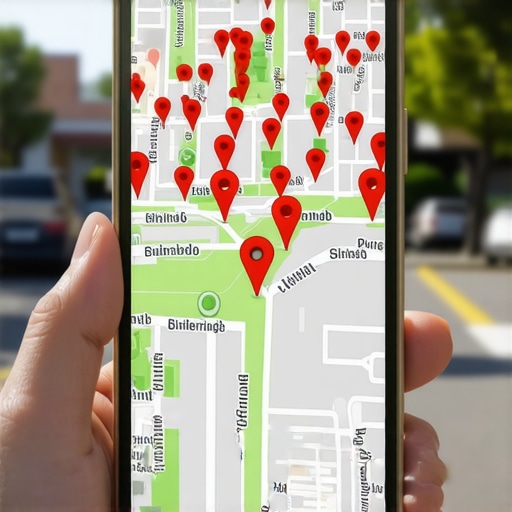
The smell of wet concrete often lingers around the digital storefronts I investigate. I am a street photographer of the digital landscape, noticing the tiny glitches in the storefront data that most small business owners overlook. A flickering neon sign in the real world is a warning; a mismatched suite number in the Google Map Pack is a catastrophe. When I audit a local ecosystem, I do not just look at keywords. I look at the spatial density of the competition. I look for the ghosts. These are the fake listings, the keyword-stuffed shells, and the service area businesses that claim to be in a downtown office that is actually a UPS Store mailbox. Cleaning your neighborhood map is not about being a snitch; it is about protecting the integrity of your local market and ensuring that real customers find real businesses. To do this, you need a gmb ranking toolkit for small business owners that prioritizes forensic evidence over generic optimization. Without this focus, you are simply screaming into a void that is already filled with digital noise.
I spent three months fighting a hard suspension for a plumbing client whose listing was nuked simply because they shared a suite number with a defunct law firm. Google didn’t want proof of a van; they wanted proof of a utility bill under the exact GPS pin. This war taught me that the map is not the territory, but the territory is exactly what Google is trying to verify through increasingly aggressive proximity filters. If you are struggling with a similar situation, you might need seo services to recover impressions after hiding business address. The algorithm does not care about your intentions; it cares about the forensic trace of your physical existence. When a competitor creates a network of fake locations to push you off the map, they are stealing your proximity authority. A systematic spam report strategy is the only way to reclaim that ground. You must approach this like an investigator, documenting the lack of signage, the empty offices, and the duplicate phone numbers that characterize map spam.
The ghost in the GPS coordinates
A spam report strategy relies on identifying fictitious entities that occupy physical space in the digital index without a legitimate storefront or service area. Clearing these ghosts requires a mix of user-suggested edits, redressal forms, and photographic evidence that exposes the lack of signage or staff at a registered location. This is not just a cosmetic fix. It is a fundamental part of a gmb audit and ranking toolkit designed to restore market equilibrium. While many agencies focus on building more citations, the real gains often come from removing the trash that clutches the top spots. If you notice that your views are dropping, you should check how to spot competitor gmb spam before it hurts your leads to see if your neighbors are playing fair. The mathematical weight of a local listing is heavily influenced by the proximity of its neighbors. If those neighbors are fake, the entire local pack becomes distorted. You need to use the exact tools we use to verify if a gmb listing is real or fake to ensure you are fighting the right targets.
“Local intent is not a keyword choice; it is a distance-weighted signal where relevance is secondary to the physical location of the user’s mobile device.” – Map Search Fundamental
Why your physical address is a liability
A business address becomes a liability when it is associated with shared office spaces, residential zones, or virtual offices that trigger Google’s automated spam filters. High-risk categories like locksmiths, plumbers, and lawyers are under constant scrutiny, meaning a single address change can result in an immediate hard suspension. This is why many owners seek seo services to fix gmb ranking loss after address change. The logic is simple; Google wants to minimize the risk of sending a user to a location that does not exist. If you have moved or merged locations, you must follow the checklist for merging duplicate listings without losing your reviews to maintain your hard-earned authority. Failure to do so creates a digital footprint of confusion. I have seen businesses lose years of progress because they did not understand how a gmb ranking toolkit handles location migrations. You can buy local seo tools for gmb, but if your address data is toxic, those tools will only accelerate your decline.
Local Authority Reading List
- Tracking Real Conversion Signals
- Finding Your Lead Leaks
- Recovering From Spam Penalties
- Proactive Profile Monitoring
The three mile radius that determines your revenue
Proximity is the most powerful ranking factor in the local algorithm, often overriding traditional SEO signals like backlink strength or domain age. Within a three-mile radius of your physical location, your visibility is determined by the density of competing listings and the accuracy of your geographic signals. If you find that you are invisible to customers just a few blocks away, you likely need the proximity audit why customers half a mile away cant find you. The physics of local search are unforgiving. A single mismatch in your NAP (Name, Address, Phone) data can cause a proximity collapse, pushing you out of the 3-pack for users on the next street over. This is why learning how to audit gmb profile with a toolkit is vital for long-term survival. You are not just fighting for keywords; you are fighting for the coordinates on the map. We have seen cases where how we recovered a clients map rank after a massive proximity-based drop involved nothing more than cleaning up orphaned citations and fixing a broken redirect.
“The proximity of the searcher to the business is the single most significant factor in the local pack, often outweighing traditional authority signals like backlinks.” – Vicinity Algorithm Research
Cleaning the neighborhood of lead generation traps
Lead generation traps are large-scale networks of fake Google Business Profiles designed to capture local calls and sell them to the highest bidder. These networks often use “keyword-stuffed” business names and virtual addresses to dominate entire cities, effectively pushing legitimate local businesses into the shadows. Using a gmb ranking toolkit to identify these patterns allows you to file effective redressal reports. You should look for profiles with no real photos, generic descriptions, and reviews that seem disconnected from the local area. If your own profile has been caught in a sweep, you may need getting back on the map after a google spam penalty. Many agencies offer services to fix soft 404 and duplicate content issues, but the core problem is usually a lack of physical evidence. When you report a fake listing, you are clearing the path for your own profile to rise. This is the only way to compete when you are in a high-spam niche. You must understand how to survive the latest shift in googles local proximity filter, which increasingly favors verified, high-trust storefronts over shadowy service area providers.
Forensic tools for the modern local strategist
A modern local ranking toolkit must include tools for spatial tracking, citation auditing, and review sentiment analysis to provide a complete picture of a business’s standing. Standard SEO tools often fail at the local level because they do not account for the “grid-based” nature of map rankings. You need to see how your ranking changes from block to block. This is what we call gmb ranking toolkit vs other local seo tools. If you are taking over a new listing, you might require seo services to restore map pack visibility after listing ownership change. This process often involves auditing the historical data of the profile to ensure no black-hat tactics were used in the past. If you find old toxins, you need to know the exact steps to wipe away old spam citations from 5 years ago. A clean history is worth more than a thousand low-quality backlinks. Every piece of data in your gmb ranking toolkit should point toward one thing; proving to Google that you are a real, reliable, and relevant part of the local community.
Restoring map pack visibility after ownership changes
Ownership changes often trigger immediate verification requests or suspensions because Google views the sudden change in primary manager data as a high-risk security event. To prevent a total loss of visibility, you must have all legal documentation, including utility bills and business licenses, ready for submission before you make the switch. If you have recently changed domains as part of an acquisition, you will likely need seo services to migrate rankings from old domain without losing gmb power. The connection between your website and your map profile is fragile. If the schema markup does not match or the landing page returns a soft 404, your rankings will tank. Use the specific schema lines that finally link your service pages to the map pack to bridge the gap. This is where many businesses fail; they think the map and the site are separate entities. In reality, they are two sides of the same coin. If one is dirty, the other will suffer. Keeping your profile clean and your data consistent is the only way to stay on the first page. Always remember that why your business is invisible to customers only three blocks away usually comes down to a lack of geographic trust. Fix the trust, and you fix the rank.