
I vividly remember the moment I realized my business was invisible on Google Maps—it was like shouting into the void, only to hear echo back. Despite countless hours tweaking my profile and hoping for the best, my local rankings stubbornly refused to budge. That lightbulb moment hit me hard: I needed a smarter, more strategic approach to elevate my GMB listings and dominate my local market.
Why Local Map Rankings Can Make or Break Your Business Today
In the hyper-competitive world of local search, having a spot in that elusive map pack can transform your business overnight. But just listing your business isn’t enough—Google’s algorithm is complex and constantly evolving. If you’re like I was, you might be wasting time on outdated tactics, wondering why your efforts aren’t translating into leads or foot traffic. Believe me, I spent months stuck in that rut until I discovered the power of tailored GMB elevation strategies that actually work. Today, I’ll guide you to those game-changing techniques that helped me climb to the top of local results and boost my visibility. Are you tired of watching competitors outrank you on Google Maps? Do you feel overwhelmed by conflicting advice and unsure where to focus your efforts? You’re not alone, and I understand that frustration intimately. My early mistakes—including neglecting key profile optimizations and ignoring customer reviews—cost me dearly. One mistake I made early on was underestimating the impact of consistent NAP (Name, Address, Phone Number) citations, which are crucial for local SEO credibility. According to Moz’s Local Search Ranking Factors, citations are among the top signals Google uses to rank local businesses. That realization prompted me to refine my local SEO game, delve into proven GMB elevation tactics, and finally see measurable results. Looking ahead, I’ll share the precise strategies and insider tips I wish I had known from the start, so you can bypass my pitfalls and accelerate your local map pack success. Whether you’re just starting or trying to improve your current standings, these tactics are your shortcut to higher rankings and more leads. Let’s dive into the actionable steps that can elevate your Google My Business profile and turn local searches into loyal customers.
Optimize Your Google My Business Profile for Maximum Impact
Start by claiming and verifying your GMB listing if you haven’t already. Ensure your NAP details—name, address, and phone number—are consistent across all online platforms to build credibility and signal reliability to Google. Fill out every available section: business hours, categories, services, and a compelling description packed with relevant keywords. Conduct keyword research for your local area and naturally incorporate those terms into your profile for better visibility. Remember, a complete profile acts like a well-dressed salesperson—making a strong first impression that encourages clicks and calls.
Leverage High-Quality Visual Content
Visuals are your virtual storefront. Upload high-res images showcasing your products, services, storefront, and team. Regularly update your gallery to show freshness and activity, signaling that your business is active and trustworthy. Use descriptive filenames with relevant keywords, and consider adding short captions with location references. An engaging photo can be the difference between a customer choosing your business over a competitor. <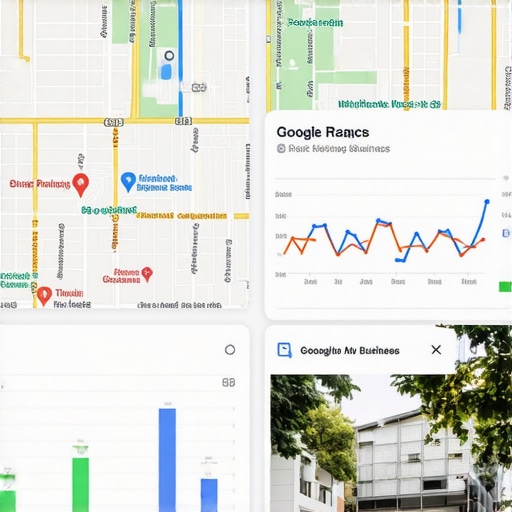 >
>
Gather and Manage Customer Reviews Effectively
Reviews are social proof that boosts your local rankings and builds trust. Proactively ask satisfied clients to leave reviews, making it easy with direct links. Respond promptly to all reviews—positive or negative—showing you value customer feedback. Incorporate keywords casually into responses to reinforce relevance. Focus on reviews that mention your services and location, as they help Google connect your profile to local intent. A steady stream of fresh reviews signals popularity and authority, pushing you higher in the map pack.
Build Local Citations with Consistent Information
Ensure your business info is accurately listed across local directories, social profiles, and industry-specific sites. Use tools or services to audit existing citations and correct inconsistencies. Focus on high-authority sites relevant to your niche to maximize their impact. Consistent NAP details reinforce your business’s credibility with search engines and local consumers alike. Citations act like endorsements—more quality signals lead to improved rankings. Check out this guide for detailed citation strategies.
Implement Local SEO and Hyperlocal Content Strategies
Optimize your website with local keywords, including city and neighborhood names, in titles, headings, and content. Create blog posts or landing pages highlighting local events, partnerships, or community involvement to boost local relevance. Structured data markup (schema) can help Google understand your location and offerings better. Think of your website as an extension of your GMB profile—every localized detail improves your chances of ranking higher in local search results. Use these techniques to refine your Local SEO game.
Harness the Power of Local Link Building
Build relationships with local influencers, partners, and customers to earn backlinks from reputable local sites. Sponsor community events, join local chambers of commerce, or participate in neighborhood initiatives—these activities generate buzz and valuable links. Local backlinks are like votes of confidence from nearby sources, signaling to Google that your business is a trusted part of the community. Focus on quality over quantity; a few links from authoritative local sites outperform numerous low-quality links. This strategy complements your other efforts seamlessly.
Utilize Map Pack Lead Generation Tools Effectively
Invest in reputable lead gen tools designed for local SEO. These platforms can help identify ranking opportunities and analyze competitor performance. Automate review requests, monitor citation consistency, and track your progress over time. Combining these tools with your optimization efforts accelerates your ascent in local rankings. For a comprehensive approach, explore this blueprint tailored for maximum results. Remember, data-driven adjustments are the fastest way to stay ahead in the competitive local landscape.
When it comes to outranking competitors in the local map pack, many business owners and marketers fall prey to oversimplified advice or misconceptions that can hinder real progress. One pervasive myth is that increasing backlinks alone will dramatically boost local rankings. While backlinks are a component of local SEO, relying solely on them ignores other critical factors like profile optimization and review management, which are equally or more important. According to Moz’s local ranking factors, consistency of NAP citations and engagement signals often carry more weight than sheer link volume. Moreover, a frequent mistake is equating paid services with sustainable results. Services promising quick boosts through manipulative tactics risk penalization from Google, which continuously updates its algorithms to combat spammy practices. Instead, long-term strategies rooted in Google’s official guidelines—like those discussed in our detailed guide on optimizing your map pack—are essential for consistent visibility.
Another nuance often overlooked is the importance of local relevance over generic optimization. Many overlook that Google’s algorithms prioritize proximity and relevance, not just volume of signals. Implementing hyperlocal content, engaging with community events, and encouraging authentic reviews create real signals that Google recognizes as trustworthy. An advanced consideration is understanding how Google’s machine learning models interpret user signals—such as click-through rate and review sentiment—highlighting the need for a comprehensive approach instead of isolated tactics. As expert sources, like those at Moz and BrightLocal, emphasize, integrating these nuanced signals creates a synergy that boosts your rankings more sustainably than superficial hacks.
Why do so many beginners miss the advanced layers of local SEO?
Honestly, it’s because the landscape has evolved beyond simple keyword stuffing and basic citation building. Google’s algorithms now employ sophisticated AI that evaluates user experience and interaction patterns, as explained in GMB elevation techniques. Falling for quick-fix services that promise instant jumps without addressing these deep signals leads to temporary gains at best—or penalties at worst. The real game-changer is understanding how to orchestrate the full spectrum of local SEO elements—profile optimization, review strategy, local content, and authoritative signals—like a symphony. If you want to avoid the common pitfalls and achieve lasting results, focus on tailored strategies backed by data and aligned with Google’s evolving AI models. Feel like you might be overlooking critical nuances? Check out our comprehensive guides or reach out via contact to discuss personalized strategies. Have you ever fallen into this trap? Let me know in the comments.Maintaining your top local rankings requires more than a one-time effort; it demands consistent application of proven tools and techniques. One of my favorite strategies is leveraging dedicated reputation management software like ReviewTrackers, which I personally use daily to monitor and respond to customer reviews across multiple platforms. This tool not only streamlines review management but also provides sentiment analysis, helping me identify and address customer concerns proactively, thus boosting my local authority. Additionally, I rely heavily on citation audit tools such as Whitespark’s Local Citation Finder to ensure all my NAP data remains uniform and credible, which Moz emphasizes as a critical ranking factor here. To automate routine tasks like data collection and local keyword tracking, I utilize Ahrefs Local SEO Tools, enabling me to stay ahead without the need for exhaustive manual efforts. In the rapidly evolving landscape, predictive analytics tools like BrightLocal’s Rank Tracker help forecast potential ranking fluctuations, allowing for preemptive adjustments. Looking ahead, integrating AI-powered chatbots for customer engagement and review solicitation is poised to become a game-changer in local SEO consistency.
How do I maintain my rankings over time?
The key is adopting a holistic approach—combine reputation management, citation consistency, local content updates, and analytics—supported by these precise tools to foster ongoing growth. Before integrating new solutions, consider testing their impact on your local visibility; for example, try implementing BrightLocal’s Rank Tracker for a month and analyze how your rankings respond. This ongoing process ensures your efforts translate into long-term success. For more tailored strategies, reach out through this contact page. Remember, consistency backed by the right tools is your best approach to staying ahead in local search.
3 Hard-Won Truths About Boosting Your Local Map Pack That No One Tells You
One of the biggest surprises I encountered was realizing that even the most polished GMB profile can underperform without a strategic review of customer engagement patterns. It’s not just about ranking higher; it’s about understanding what prompts local consumers to choose your business over competitors, which often means diving into data-driven insights that aren’t obvious at first glance.
Another lightbulb moment was how vital hyperlocal content became once I shifted my focus from broad keyword stuffing to hyper-focused community involvement and localized storytelling. These aren’t just quick wins—they build authentic trust, which Google’s AI increasingly values in ranking signals.
And perhaps most unexpectedly, I learned that consistency over time, especially in review management and citation accuracy, creates a ripple effect that amplifies your visibility far beyond initial efforts. Small daily actions add up, turning a struggling profile into a local powerhouse when combined correctly.
My Top Tools for Mastering Local Search Visibility That Changed Everything
- BrightLocal: This platform provides comprehensive analytics and review management, giving me clear visibility into my local ranking health and customer sentiment trends. It’s been foundational in maintaining consistency and spotting opportunities early.
- Whitespark’s Citation Finder: Keeping my NAP data spotless across directories was a game-changer, ensuring Google trusts my information and my rankings stay stable amidst algorithm changes.
- Google’s own Insights: Often overlooked, Google My Business dashboard offers invaluable real-time data on how users find and interact with my listing—directly informing my ongoing strategy.
- Local SEO Automation Tools: Automating review requests and citation audits saves time and keeps my profile active with fresh signals that search engines love.
The Spark That Kindled My Drive to Keep Going in Competitive Local SEO
What truly fuels my commitment is seeing tangible results—when my rankings climb after implementing these nuanced strategies, I know that I’ve unlocked a personalized system that works. It’s inspiring to realize that mastering local search isn’t about chasing quick fixes but about cultivating a responsive, community-oriented presence that Google recognizes and rewards. If you’re ready to elevate your local map pack presence, remember: every small action—be it engaging with reviews or updating your content—builds toward your ultimate success. Keep experimenting, stay consistent, and don’t hesitate to reach out for personalized guidance on your journey to local SEO excellence. Are you prepared to implement these insider tactics and transform your visibility today? Let me know below.