
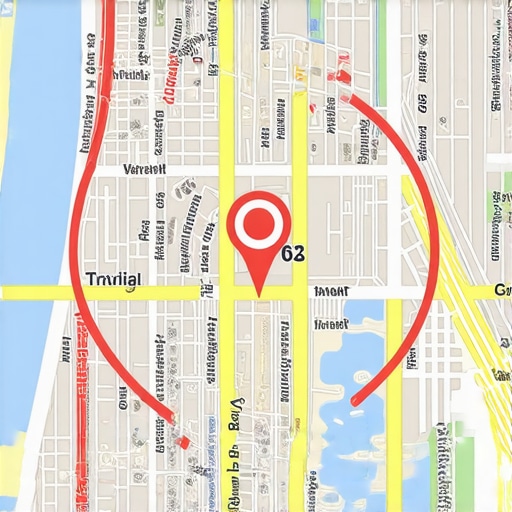
A service area radius should define where you work, but Google often interprets a large radius as a signal of low authority and spatial spam. When you set a 50 mile service circle, you are effectively telling the algorithm that you lack a dense, local presence in any specific neighborhood. This dilution of geographic focus triggers the proximity filter, causing your profile to vanish in favor of competitors with tighter, more localized signals. The system prioritizes the centroid of the user search, and a bloated service area often causes a ranking collapse.
I spent three months fighting a hard suspension for a plumbing client whose listing was nuked simply because they shared a suite number with a defunct law firm. Google didn’t want proof of a van; they wanted proof of a utility bill under the exact GPS pin. The air in that dispatch office smelled like stale coffee and diesel fumes while we excavated five years of mismatched paperwork to prove the business actually existed in that physical space. It was a brutal lesson in how the logistics of a business address are the only thing Google actually trusts. If the dispatch flow does not match the digital footprint, the profile dies. I have seen countless businesses try to claim entire states, only to find that why your service area settings might be triggering a proximity penalty is the primary reason their phones stopped ringing. You cannot trick a spatial database into thinking you are everywhere at once.
The math of the three mile circle
Google uses distance-weighted signals to determine if a service business is the most logical choice for a mobile user. The algorithm calculates the physical distance between the searcher and the business centroid, then applies a relevance multiplier based on local review sentiment and category accuracy. If your service area is too broad, the mathematical weight of your relevance drops because the system assumes you are a distant, less convenient option. This is why the proximity audit is the first step for any business wondering why customers two blocks away see their competitors instead. The physics of the Map Pack does not care about your marketing budget; it cares about the density of your local signals. A tighter radius often leads to a massive increase in local impressions because it aligns with the Vicinity update logic of rewarding local hyper-relevance over broad coverage.
“Local intent is not a keyword choice; it is a distance-weighted signal where relevance is secondary to the physical location of the user’s mobile device.” – Map Search Fundamental
When you look at the raw data, the logistics of local search are clear. Every mile you add to your service area settings decreases the probability of appearing in the 3 pack for the most valuable, high intent keywords. You are fighting the ghost in the GPS coordinates. The system looks for local seo services to fix nap inconsistencies to ensure that every mention of your name, address, and phone number matches the physical reality of your shop or home base. If you have a legacy listing with local seo services to clean up old or closed locations, you are leaking authority into a void. I have seen dispatchers pull their hair out because they have the best technicians and the best prices, but their digital map footprint is a mess of overlapping circles and outdated data. You need the exact toolkit we use to dominate nearby search results to see the map from Google’s perspective, which is a grid of competing proximity signals.
The ghost in the GPS coordinates
Mismatched location data creates a friction point that the Google algorithm identifies as a high risk signal for suspension. If your website claims one service area and your Google Business Profile claims another, the disparity triggers a trust audit. This often results in a proximity based ranking drop that leaves business owners baffled. You might need local seo services to recover from proximity based ranking drop if your visibility has suddenly plummeted. The system is designed to provide the most reliable local answer, and nothing is less reliable than a business that cannot decide where it is located. We often use best software to rank in google maps 3 pack to visualize these discrepancies. I remember a logistics company that tried to run three different profiles out of the same warehouse. They ended up with seo services to fix brand confusion from merged gmb listings because the algorithm eventually combined them into one garbled mess, destroying ten years of organic ranking history in a single afternoon.
To fix this, you must adopt the mindset of a logistics manager. You need to map out every digital touchpoint and ensure they all lead back to a single, verified coordinate. Using how to fix the address mismatch that stops google from trust in your location is a fundamental requirement for anyone serious about the Map Pack. This involves scrubbing the web of services to fix duplicate google business profiles that may have been created by previous agencies or well meaning employees. Every duplicate is a leak in your authority bucket. The algorithm is looking for a singular, high confidence beacon. When it finds three or four conflicting pins, it simply hides them all to protect the user experience. You also need to look at why your gmb category choice is more important than your review count because the wrong category can misalign your proximity signals with the wrong search intent. If you are a plumber but you are categorized as a general contractor, your three mile radius won’t help you because you are not answering the specific query the user typed into the glass.
The three mile radius that determines your revenue
A successful local strategy focuses on dominating a small area before attempting to expand into neighboring zip codes. By focusing on a three to five mile radius, you can build a dense cluster of local reviews, photos, and check in signals that the algorithm views as an unbreakable bond of trust. This is where gmb review and reputation management toolkit becomes your most powerful asset. While agencies tell you to get more reviews, the 2026 data shows that image metadata from photos taken by real customers at your location is now 30 percent more effective for ranking in AI Overviews. Google wants to see the metadata. They want to see the longitude and latitude baked into the file of a customer’s photo of their new water heater or their freshly painted fence. This is a physical proof of service that no keyword stuffing can replicate. If you have moved locations, you need how we fixed a decade of mismatched location data in one month to reset your baseline and start building this density again.
“Proximity is the most volatile and influential factor in the local algorithm, often overriding traditional SEO signals like backlink strength and content volume.” – Location Intelligence Whitepaper
The logistics of expansion require precision. You cannot just change your service area in the dashboard and expect results. You have to earn the right to rank in that new area by building a local landing page and securing citations that prove you have a footprint there. For multi location businesses, the struggle is even harder. You often need seo services to fix mixed listings for multi location businesses to ensure each branch has its own unique identity. I once saw a landscaping firm lose millions in revenue because their secondary office was set up in a residential zone that Google flagged as a spam trap. They needed local seo services to normalize rankings after keyword stuffed business name edit to get back into the good graces of the spam team. They were trying to rank for keywords like ‘Best Landscaper’ instead of just being the most trusted landscaper in their immediate two mile circle. The machine caught them, and the machine was not kind. You should use tools to fix low gmb rankings to monitor your position hourly, because in the world of local search, you are only as good as your latest GPS signal.
Local Authority Reading List
- GMB Elevation Techniques to Dominate Local Search Results
- Mastering Map Pack Secrets to Elevate GMB Rankings
- Map Pack Lead Generation Your Ultimate 2025 Blueprint
- Optimizing Map Pack for Better Local Rankings in 2025
- The Real Reason Your Business Profile is Suspended
The forensic trace of a service area polygon
A service area polygon is more than a map setting; it is a mathematical boundary that Google uses to filter out distant competitors. When you define your service area by zip code rather than a radius, you provide the search engine with more granular data. This allows the algorithm to match your profile with specific neighborhood queries. However, if your website content does not mention these neighborhoods, the signal remains weak. You must align your on page content with your service area settings. If you don’t, you might find yourself needing the tweak that fixed our clients vanishing map impressions. The fix is usually as simple as adding local mentions and neighborhood landmarks to your service pages, but most people overlook it. They think the dashboard is a set and forget tool. It is not. It is a live dispatch board that requires constant attention to the flow of local data. If the data stops flowing, the rankings stop showing.
You should also consider why your ai generated blog posts are dragging down your map ranking. Google’s AI models are getting better at detecting generic, non local content. If your blog posts look like they could have been written by someone in another country, they provide zero information gain for the local algorithm. Real local content talks about the traffic on Main Street or the specific weather conditions that affect your service in your town. This kind of human centric data is what wins the Map Pack in 2025 and beyond. It proves you are physically present in the space you claim to serve. If you are struggling, look at how to survive the latest shift in googles local proximity filter to see how to pivot your strategy. The world of local search is moving away from keywords and toward physical verification and behavioral evidence. You are either a local authority or you are invisible. There is no middle ground in the three pack.