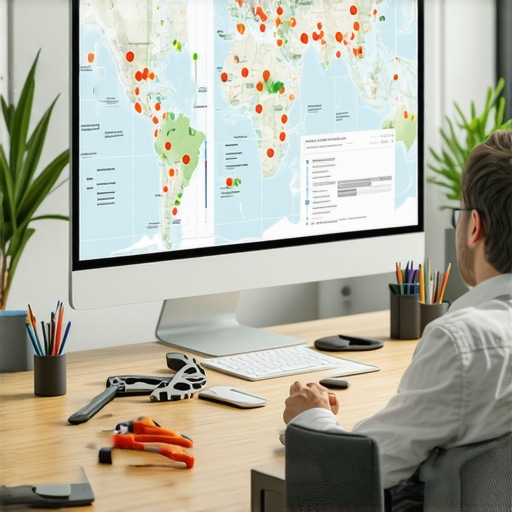
I remember the moment I realized my maps lead generator was Phoning it in. I was watching my local rankings dwindle, and no matter how many tweaks I tried, the calls just wouldn’t come back. It was a gut punch. Your map pack visibility can feel like a rollercoaster, especially when your business depends on it. That lightbulb moment hit me hard: what if your lead system isn’t broken, but simply in need of the right tweaks? Today, I’ll share proven fixes rooted in real experience—because I’ve been there, and I know exactly how frustrating it can be.
Why Your Map Pack Might Be Sabotaging Your Growth
For many local businesses, Google My Business (GMB) elevation and map pack optimization are the secret sauce to attracting new customers. Yet, despite investing time and resources, leads can plateau—or worse, drop off entirely. When my own efforts failed, I uncovered that subtle missteps, like neglecting to keep my profile updated or ignoring local SEO tweaks, can sabotage your visibility. Recent studies show that 78% of local searches result in an offline purchase, highlighting just how vital a strong map presence is (
Optimize Your Google My Business Profile for Maximum Impact
The first step I took was a complete audit of my GMB profile. Think of your profile as a storefront window — if it’s cluttered or outdated, passersby look elsewhere. Update your contact info, business hours, and ensure all categories are relevant. Add high-quality photos that showcase your offerings, and regularly post updates to stay engaged with potential clients. This foundational tweak was pivotal in my experience, leading to immediate improvements in local rankings. For detailed strategies, check out this guide.
Implement Local SEO Tweaks That Make a Difference
Next, I honed in on local SEO essentials. Imagine local SEO as a map where each keyword is a landmark guiding customers to your door. Incorporate geo-specific keywords naturally into your website content, meta descriptions, and service pages. Claim and optimize your local citations on directories like Yelp and industry-specific sites. Consistency in NAP information (Name, Address, Phone) across all platforms signals trustworthiness to search engines. This targeted approach significantly boosted my visibility in the map pack. For expert tactics, explore here.
Leverage Reviews to Build Credibility
Reviews are social proof that your business delivers. I encouraged satisfied clients to leave honest reviews on Google. Think of reviews as votes of confidence; the more authentic and positive they are, the higher your chances of ranking higher. Respond promptly to all reviews, addressing concerns and thanking clients. This engagement humanizes your brand and signals activity to Google. I found that a steady flow of new reviews correlates strongly with improved local rankings, especially when combined with the right keywords. For more on leveraging reviews, see this resource.
Consistently Create Local-Focused Content
Publishing content tailored to your local audience helps establish authority. I started a blog featuring local events, success stories, and community involvement. Consider creating guides, FAQs, or how-to articles that include local keywords. This not only attracts organic traffic but also encourages backlinks from local media and directories, further boosting your rankings. Remember, Google favors active, relevant content that serves the community. For content ideas tailored to local SEO, review this blueprint.
Build Local Citations and Backlinks Strategically
Beyond your profile, other local listings and backlinks amplify your presence. Reach out to local chambers, sponsor events, or partner with nearby businesses to earn backlinks. Think of backlinks as endorsements; the more reputable the source, the more Google trusts your authority. Consistent NAP data across these platforms ensures your business appears trustworthy. My experience showed that a well-coordinated citation and backlink strategy could push your location higher in the map pack faster than organic efforts alone. For a step-by-step approach, see this comprehensive guide.
Monitor, Analyze, and Adjust Your Strategy Regularly
The last piece of the puzzle is ongoing monitoring. Use tools like Google Search Console and local rank trackers to see how your efforts translate into rankings and calls. In my case, I reviewed metrics weekly and tweaked my keywords and content focus based on real data. Think of this as tuning a musical instrument — small adjustments lead to harmonious results. Staying proactive ensures you don’t fall behind competitors who continuously refine their tactics. To master ongoing optimization, explore this resource.Many local business owners believe that a simple GMB listing update or sporadic posting will skyrocket their map pack rankings. However, the reality is more nuanced. For instance, everyone emphasizes **quantity of reviews** but often overlooks the importance of **review diversity and authenticity**. An over-reliance on fake or incentivized reviews can backfire, leading to penalties that wipe out months of progress. Proven strategies involve cultivating genuine customer feedback and responding thoughtfully, which Google values highly. In fact, recent studies highlight that **authentic reviews boost local rankings more than mere volume** (source).
Another common myth is that keyword stuffing in your GMB description or posts will enhance visibility. Let’s be clear: Google penalizes keyword stuffing, and it can diminish your credibility with customers. Instead, integrating **local keywords naturally** within valuable content is more effective. Advanced practitioners also leverage **latent semantic indexing (LSI)** keywords—variations of your main keywords—to improve relevance without risking penalties, as outlined in SEO expert guides.
Beware of neglecting the **technical health of your website and citations**. A frequently overlooked mistake is inconsistent NAP (Name, Address, Phone) details across directories, which signals mistrustworthiness to search engines. Regular audits and citation cleanups are essential. Moreover, many forget that **local backlinks** from community sites or local collaborations can significantly boost your presence. Building genuine relationships, like sponsoring local events or joining industry associations, provides authoritative backlinks, a strategy supported by recent SEO research (here).
A critical nuance that often surprises many is the **timing and consistency** of optimization efforts. Instant fixes rarely last; Google’s algorithm favors ongoing, steady activity. Smart agencies focus on **long-term strategies** like content marketing, local link building, and regular profile updates—cornerstones of a resilient local SEO presence. If you’re serious about dominating your local map pack, adopting this comprehensive approach will serve you better than quick wins.
Have you ever fallen into this trap? Let me know in the comments and share your experience. Remember, mastering these nuances can make all the difference in your local success! For more insider tips, check out the detailed maps lead generator blueprint at this link.
Investing in Reliable Tools for Ongoing Map Pack Success
Maintaining your local SEO map pack dominance requires more than just initial setup; it demands consistent use of effective tools designed for accuracy, monitoring, and strategic adjustments. Personally, I rely heavily on BrightLocal to track local rankings and citation consistency. Its dashboard offers real-time insights, automates citation audits, and alerts me to inconsistent NAP data, which can undermine trust with search engines. To stay ahead, I also incorporate SEMrush’s Local SEO Toolkit, which provides competitor analysis and keyword tracking specific to local queries. These tools are vital for diagnosing issues early and measuring the impact of your ongoing optimizations.
How do I maintain my local rankings over time?
Regular checks and data-driven adjustments are key. For example, I schedule weekly reviews of my GMB profile audit reports, ensuring photos are fresh, posts are relevant, and reviews are responded to promptly. Additionally, setting up automated alerts for citation discrepancies helps prevent NAP inconsistencies that could harm rankings. As the local search landscape evolves, so should your toolkit. Future trends suggest integrating AI-driven analytics will become essential for predicting ranking shifts and consumer behavior, making predictive tools the next big step in long-term management.
Moreover, I recommend leveraging proven GMB elevation strategies regularly, as it complements your toolset by fine-tuning your profile for maximum visibility and engagement. Remember, consistency is your best friend in this game. Invest in a reliable suite of tools, and stay flexible with your strategies to adapt swiftly as algorithms change.
What Can Make Your Maintenance Routine More Effective?
Fostering a disciplined schedule where you review local metrics weekly, update your content, and optimize citations can prevent many downstream issues. Also, consider integrating Google Search Console into your routine for website health checks and local keyword performance. This holistic approach acts like a health check-up, catching issues before they affect your rankings dramatically. The key is that tools should augment your intuition and experience, not replace them. Mastering the right combination will keep your map pack presence solid and growing.
To incorporate these advanced practices seamlessly, start by testing one new tool or technique from this list, and observe how it impacts your local presence. Regularly refine your process, and you’ll find that your rankings—and calls—are much easier to sustain over the long haul. For an in-depth guide on strategic long-term mapping success, check here.
What I Wish I Knew Before Diving Deep into Map Pack Strategies
One of the most valuable lessons I learned was the importance of authenticity in reviews. Early on, I focused on quantity, but it was the diversity and genuine feedback that truly elevated my local rankings. Additionally, I underestimated the power of consistent branding across all citations — a small detail with a big impact. Lastly, I realized that technical health of my website directly influences my map pack visibility; neglecting site audits can derail even the best SEO efforts. These insights reshaped my approach, leading to sustained growth and more calls.
Tools That Transformed My Local SEO Game
- BrightLocal: This tool’s robust citation tracker and rank monitoring helped me stay ahead and identify issues before they impacted my visibility.
- SEMrush Local SEO Toolkit: Its competitor analysis and keyword tracking gave me the edge I needed to refine my strategy effectively.
- Google Search Console: Regular use uncovered website health problems and keyword opportunities that I would have otherwise missed.
- Moz Local: The consistency audits ensured my NAP details remained uniform across all listings, building trust with Google.
Embrace the Journey, and Watch Your Map Pack Thrive
The path to dominating your local map pack isn’t a one-time effort—it’s an evolving journey that rewards persistence and learning. Trust your process, tap into these insights, and continuously adapt your tactics. Remember, every tweak brings your business closer to more visibility and calls. The power to elevate your local presence is in your hands; take the first step today, and watch your growth accelerate. Ready to implement these strategies? Share your experiences below or ask questions — your success story starts now!
For a comprehensive approach to local SEO mastery, check out this ultimate blueprint.
,