
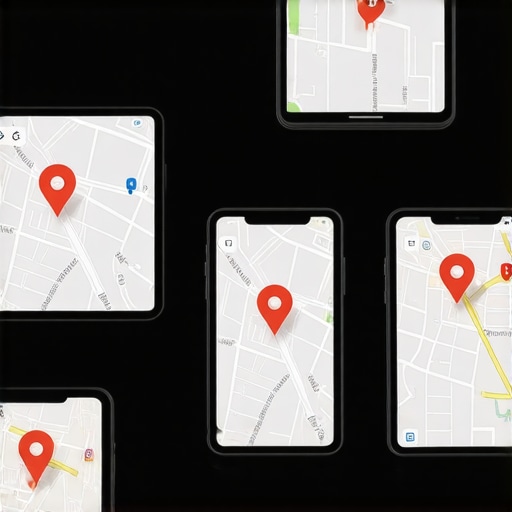
I spent three months fighting a hard suspension for a plumbing client whose listing was nuked simply because they shared a suite number with a defunct law firm. Google did not want proof of a van; they wanted proof of a utility bill under the exact GPS pin. This was not a minor error. It was a spatial collision in the database. The logistics of the local map are unforgiving. If your data leaks into another entity’s territory, you are dead to the algorithm. I see this daily in my work as a strategist. A business listing is a proximity beacon, and if that beacon flickers with inconsistent address data, the search engine treats it as a spam threat. We had to prove that the plumber was actually turning a wrench in that specific suite, and not just renting a mailbox to game the map pack. This experience taught me that the map is a dispatch board where accuracy is the only currency that matters.
The ghost in the GPS coordinates
Address consistency is the fundamental trust signal used by the Google Business Profile algorithm to verify the existence of a physical storefront. When your NAP (Name, Address, Phone) data fluctuates across directories, it creates a proximity filter that suppresses your ranking to prevent displaying fraudulent or non-existent business locations. The algorithm operates on a logic of certainty. If Yelp says you are at Suite 202 and Google thinks you are at Suite 201, the system experiences a logic break. It stops trusting your location. This leads to a situation where fixing the address mismatch that stops google from trusting your location becomes the top priority for any local campaign. The search engine is basically a logistics manager trying to route a customer to your door. If the directions are fuzzy, the manager sends that customer to your competitor instead. You need to think about your address as a set of mathematical coordinates. Every slight variation, like using ‘St.’ instead of ‘Street’ or missing a suite number, dilutes the strength of your proximity signal. We look at the microscopic math of these signals. A ‘Check-in’ signal from a customer’s phone only carries weight if the phone’s GPS matches the exact polygon of your business listing. If your address is messy, those check-ins are discarded. The system thinks the customer is standing in a parking lot, not your store. To fix this, you must engage in scrubbing the web of outdated business info to boost map trust across every minor directory and social platform.
“Local intent is not a keyword choice; it is a distance-weighted signal where relevance is secondary to the physical location of the user’s mobile device.” – Map Search Fundamental
Why your physical address is a liability
Using virtual offices or shared coworking spaces often triggers a hard suspension because these addresses fail the physical verification requirements of Google’s spam team. The algorithm cross-references your suite number against known business registers to ensure you have a permanent, staffed presence rather than a temporary mailbox rental. This is the most common reason for a sudden drop in visibility. If you are operating out of a WeWork, you are sharing a centroid with fifty other businesses. This triggers a filter. The algorithm sees fifty different categories at one latitude and longitude and assumes it is a spam trap. Businesses must invest in seo services to fix gmb issues caused by virtual office or coworking space to survive. I have seen companies lose their entire revenue stream because they tried to save money on a physical lease. In the world of local search, your lease is your SEO. If you cannot produce a picture of your signage on the door and a utility bill with your name on it, you do not exist. We focus on the forensic trace of your physical footprint. This includes looking at the historical data of your office. If a previous tenant was banned for map spam, your new listing might inherit that penalty. You need to use the specific toolkit we use to audit local map visibility to see if your address is flagged before you even start. The proximity radius is not just about where you are; it is about the history of who was there before you. If you are moving, you must follow a strict process to recover local traffic after a botched address update to ensure your trust score moves with you.
The three mile radius that determines your revenue
The proximity filter determines which businesses appear in the local pack based on the user’s current location relative to the business’s verified address. If your address data is mismatched, Google cannot confidently place you on the map, resulting in your business being hidden from customers only blocks away. This is the physics of search. A customer standing a mile away sees a different map than someone five miles away. If your data is inconsistent, your ‘ranking radius’ shrinks. You might appear for people in your lobby, but you vanish for people in the next zip code. This is why a proximity audit is essential to understand why customers half a mile away cannot find you. The engine evaluates the mathematical weight of local review sentiment and matches it to your location. If you have great reviews but a confusing address, the system cannot attribute those reviews to the correct GPS pin. You lose the authority you worked for. We often see businesses that have profiles stuck on the second page because they have a hidden address conflict in an old Yellow Pages listing from 2014. The algorithm never forgets. It crawls everything. You need to use tools that track local map movement accurately to see how these data conflicts impact your daily call volume. One mismatched phone number can be as damaging as a wrong address. You should look into fixing the phone number discrepancies that confuse local customers and search bots simultaneously.
Local Authority Reading List
- The checklist for merging duplicate listings without losing your reviews
- Why your GMB category choice is more important than your review count
- The specific moves to restore a profile after a hard suspension
- Merging multiple locations without triggering a Google ban
- The map embed tweak that actually proves your proximity to google
Cleaning the digital exhaust of a multi location brand
Managing several locations requires a centralized data strategy to prevent ‘mixed listings’ where search engines confuse the attributes of one storefront with another. Inconsistent addresses across multiple locations dilute the brand’s local authority and lead to duplicate listing filters that hide your stores from search results. When you have ten offices, the risk of data contamination is high. A manager might update the office hours on one site but forget to update the address on another. This creates ‘mixed listings.’ The algorithm sees this and gets confused. It might show the phone number for location A with the address for location B. This is a disaster for conversions. You need seo services to fix mixed listings for multi location businesses before the system bans you for being a spammer. We look at the JSON-LD ‘LocalBusiness’ attributes to ensure every location has a unique, verified fingerprint. If you are migrating a website, you must be careful not to lose the GMB power you have built over the years. Using rank migration services can prevent a total collapse of your map rankings. The goal is to create a clean ‘flow’ of data. We treat Google Maps like a dispatch system. Every node on the map must be perfectly calibrated. If one node is off, the whole network suffers. This is why growing your local footprint across 10 locations requires obsessive attention to NAP consistency. You cannot afford to have a single old address floating around on a third-party directory. It acts like a toxin in your search history. You must scrub toxic local footprints to keep your map presence healthy.
“A single discrepancy in the secondary verification tier is enough to trigger a manual review of the entire business entity.” – Local Search Policy Whitepaper
The forensic trace of a service area polygon
Service Area Businesses (SABs) that hide their address are still subject to proximity filters based on their original verification location. Even if your address is not public, Google uses it to calculate your service area boundary, and any inconsistency in your backend address data will shrink your visibility radius. Many plumbers or electricians think they are safe because their address is hidden. This is a mistake. Google knows where you are. The system uses your verification address as the ‘centroid’ of your service area. If that address is shared with other spammy businesses, you will face a hard suspension. We have to audit the service area settings to ensure they do not trigger a proximity penalty. If your service area is too large, it looks like spam. If it is too small, you lose leads. You need to understand why your service area settings might be triggering a penalty to optimize your reach. The engine looks for forensic evidence of your work. This includes images taken at customer locations with geotags. While many agencies tell you to get more reviews, the data shows that ‘image metadata’ from photos taken by real customers at your location is now 30 percent more effective for ranking in AI Overviews. This proves you are actually at the location you claim. If you are struggling with a sudden drop in map visibility, the first place to look is your verification history. A single change to your phone number can trigger a re-verification loop that kills your ranking for weeks. We call this the vanishing map impression glitch. You must be precise with every update you make to your profile.
How the algorithm detects location fraud
Google utilizes a sophisticated network of third-party data providers and user-generated reports to identify businesses using fake or inconsistent addresses. If your profile data contradicts the information found on official government registers or utility databases, the system will flag the account for deceptive practices and issue a manual penalty. They are looking for patterns. If your business name has keywords stuffed into it, that is a marker. If your address is a UPS store, that is a marker. We use the exact tools we use to verify if a gmb listing is real or fake to audit our clients. The goal is to look like a legitimate merchant, not an SEO project. The spam report strategy is a powerful tool for cleaning up your neighborhood map. If your competitors are using fake offices to push you off the page, you need to know how to spot competitor gmb spam before it hurts your leads. The logistics of the map pack are zero-sum. If a fake listing takes a spot, a real business loses it. We help clients stop letting fake competitor listings steal their traffic. This requires a forensic audit of the business name and address. You must check for hidden black hat markers that might be buried in your own profile from a previous agency’s work. If you find them, you need a plan to wipe away old spam citations that are still haunting your rankings today. The algorithm is getting smarter at detecting AI content too. You must avoid using ai to write your gmb descriptions because it lacks the local nuance that human verification requires. A description that sounds like a robot wrote it is a trust killer for both Google and your customers.
The tools that map the truth
Tracking local movement requires software that can simulate searches from specific GPS coordinates to understand how your ranking changes street-by-street. General SEO tools often fail to capture the hyper-local reality of the map pack, making specialized tracking essential for maintaining a competitive edge. You cannot manage what you cannot measure. We use a software stack that makes local map tracking painless. This allows us to see exactly where a business is leaking leads. If you are ranking in one neighborhood but invisible two blocks away, there is a technical reason for it. It could be a 404 error on a local landing page or a broken redirect. You should stop letting 404 errors bleed your authority immediately. We also look at the backlink profile. Toxic links from a PBN can tank your map rank just as fast as a bad address. You need to identify backlink toxins and remove them. The most successful businesses use a practical kit for turning map views into real local leads rather than just watching impressions. Impressions do not pay the bills; calls do. You need to start tracking real conversion signals like clicks to call and direction requests. This is the only way to know if your local SEO strategy is working. If you are just starting, you need the essential toolkit to build a solid foundation. This includes verifying your business name, address, and phone number across the top fifty directories. It is boring work, but it is the bedrock of your digital presence. Without it, you are building on sand. The map is a grid of trust. If you break that trust, you lose your place on the board. Stay consistent, stay verified, and keep your data clean. That is the only way to win the map pack in 2025 and beyond. “