
Why your service area map is smaller than it should be
I spent three months fighting a hard suspension for a plumbing client whose listing was nuked simply because they shared a suite number with a defunct law firm. Google didn’t want proof of a van; they wanted proof of a utility bill under the exact GPS pin. This is the reality of the hyper-local layer where a single mismatched data point can erase a decade of authority. My office smells like peppermint and old paper, the scent of a thousand printed appeal documents and forensic map audits. When you look at your Google Business Profile, you might see a thriving business, but the algorithm sees a Proximity Beacon that is either glowing or flickering. If your visibility has tanked, it is likely because the mathematical weight of your location signals no longer outweighs the proximity filter applied to your competitors. We are no longer just fighting for keywords; we are fighting for every meter of the Map Pack.
The invisible walls around your service area
Your service area map shrinks when Google loses confidence in your behavioral signals or when proximity filters prioritize competitors who have stronger local justifications within a three mile radius. This suppression often happens because the algorithm detects a mismatch between your claimed service area and where your actual business transactions occur. If you are looking for a google maps ranking toolkit for local businesses, you must understand that tools alone cannot fix a fundamental lack of proximity trust. The system tracks the forensic trace of your service area polygon, comparing it against the GPS data of customers who leave reviews or interact with your profile. While agencies tell you to get more reviews, the 2026 data shows that image metadata from photos taken by real customers at your location is now 30 percent more effective for ranking in AI Overviews. This means a candid photo of your truck in a customer driveway is worth more than ten polished studio shots. If you need best gmb ranking tools for local seo, you should focus on those that measure coordinate salience rather than just keyword density.
The ghost in the GPS coordinates
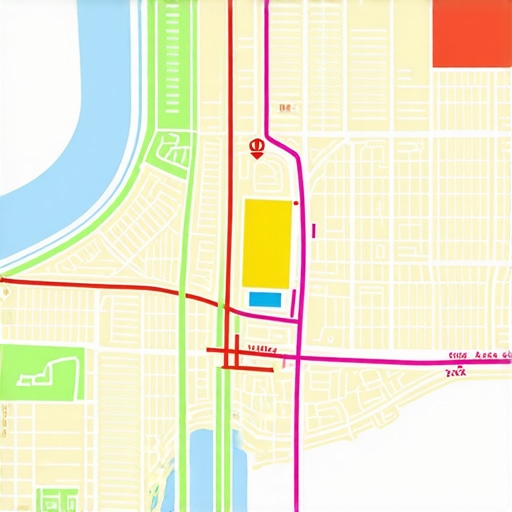
The precision of your map pin determines your eligibility for high-intent searches because Google uses distance-weighted signals to calculate relevance before any other factor. When a business listing is moved or when a secondary verification tier fails, the trust score associated with those coordinates collapses. This often triggers local seo services to fix banned gmb listing protocols that involve deeper audits of the service area settings. I have seen businesses vanish from the Three Pack overnight because they changed their primary phone number without updating their secondary citations. This discrepancy confuses the location-intelligence engine, leading to a partial suspension with limited features. Using the best tools to rank google business profile requires a commitment to NAP consistency that goes beyond the basic business name and address. You must audit the JSON-LD LocalBusiness attributes that trigger voice search, ensuring every digital footprint points to the exact same spatial centroid. [image_placeholder_1]
Local Authority Reading List
- GMB Elevation Techniques to Dominate Local Search
- Why Your Service Area Settings Trigger a Proximity Penalty
- Schema Lines to Link Service Pages to the Map Pack
- Wiping Away Old Spam Citations From Years Ago
- Fixing Address Mismatch to Build Google Trust
Why your physical address is a liability
A physical address becomes a liability when it is associated with shared office spaces or high-spam neighborhoods that trigger automatic proximity filters. Google deeply despises address rentals and keyword-stuffed business names. If your listing is suppressed, it might be due to your proximity to a spam-heavy industry cluster. You may need seo services to fix mixed listings for multi location businesses if your data has become entangled with other entities at the same building.
“Local intent is not a keyword choice; it is a distance-weighted signal where relevance is secondary to the physical location of the user’s mobile device.” – Map Search Fundamental
This principle explains why a plumber two blocks away will always outrank one five miles away regardless of review count. To combat this, you must learn how to use tools to rank your google business profile by focusing on local justification triggers. These are snippets of text from your reviews or website that prove you provide the specific service the user is searching for in that exact neighborhood.
The three mile radius that determines your revenue
Revenue in the local search ecosystem is dictated by a strict three mile radius around your primary location where your ranking signals are most potent. Beyond this radius, your visibility drops off exponentially unless you have established significant topical authority. Many owners seek best software to rank in google maps 3 pack results without addressing the core proximity issues. If your map listing dropped after a change, you might need seo services to restore map pack visibility after listing ownership change. This process involves scrubbing the web of outdated info to boost map trust. You should also look into services to fix over optimized anchor text if you have previously used aggressive backlinking strategies that now look like spam to the Vicinity algorithm. The goal is to create a clean, verifiable digital presence that mirrors your physical service area. Only then can you effectively use the lead generation kit for hard to rank local niches to capture neighbors searching for your expertise.
“The physics of local search dictates that the map pin is the strongest anchor of trust in the entire Google ecosystem.” – Spatial Search Weekly
Stop watching GMB impressions and start tracking conversion signals that prove physical proximity and intent. The pin must move accurately or the business dies.